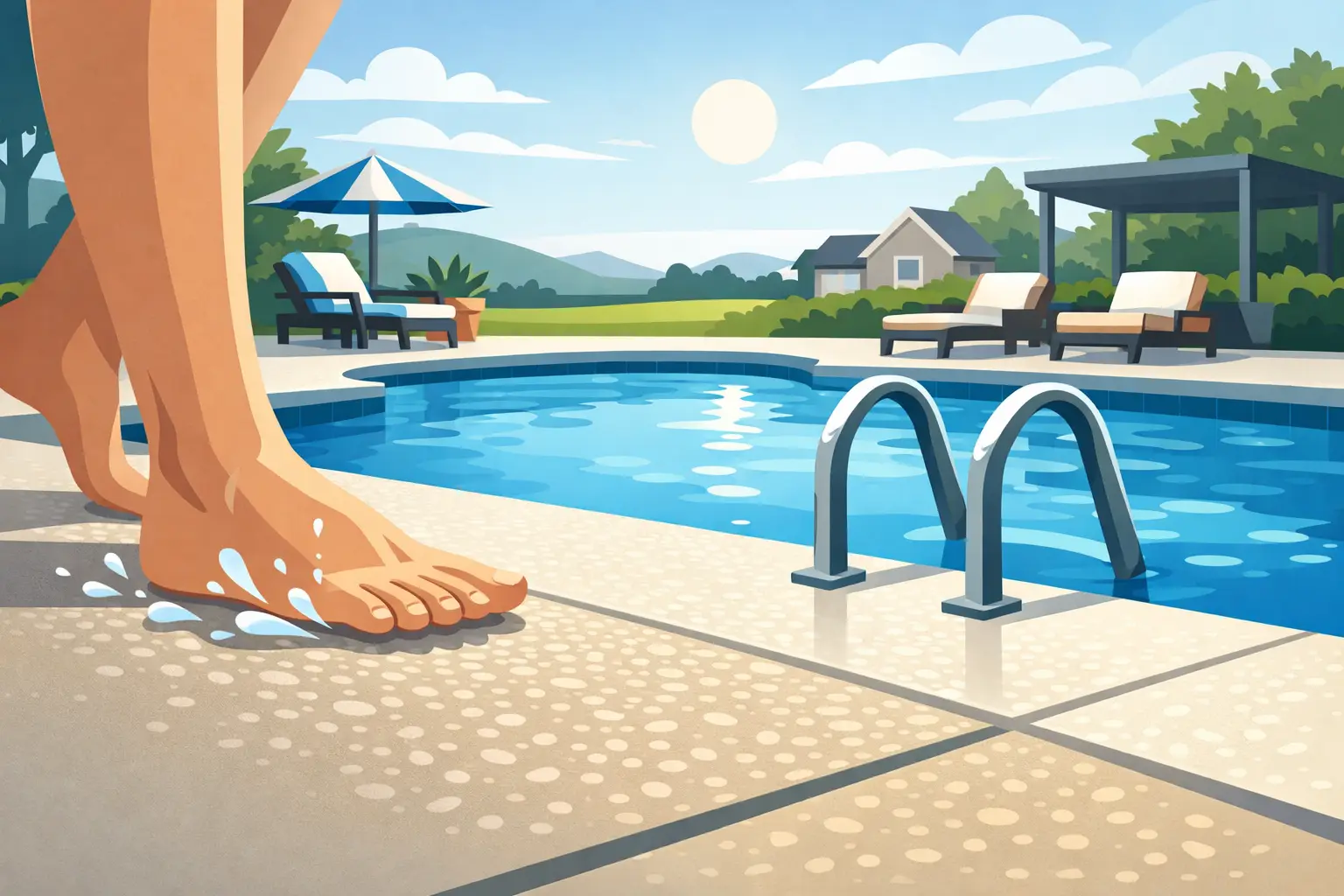
A pool deck should be the easy part of summer: wet feet, kids moving between the water and patio furniture, and guests gathering without anyone worrying about their footing. A slip resistant pool deck coating gives Indiana homeowners a better way to manage that reality while protecting concrete from moisture, sun, freeze-thaw cycles, and everyday wear.
The right system does more than add texture to a slick slab. It creates a finished surface engineered for outdoor use, with dependable traction and a clean, intentional appearance. For a pool area, that balance matters. A deck that is aggressively rough can be uncomfortable barefoot; a surface that looks smooth but becomes slick when wet creates a safety concern. The goal is practical grip without turning your pool surround into sandpaper.
Why Bare Concrete Can Become Slippery
Concrete is often assumed to be naturally slip resistant because it starts with a textured finish. Over time, though, its surface changes. Foot traffic wears down high spots. Algae, sunscreen, body oils, dirt, and mineral deposits build up. Moisture settles into porous concrete, and repeated cleaning can leave the surface increasingly difficult to manage.
Indiana weather adds another layer of stress. Rain and humidity keep outdoor surfaces damp. Winter freezing and thawing can widen small cracks and loosen weak concrete near the surface. UV exposure can fade unprotected finishes, while pool chemicals and cleaning products can leave stubborn marks. A deck may still look serviceable from a distance while becoming harder to clean, less attractive, and less secure under wet feet.
A coating will not eliminate the need for common-sense pool safety, such as clearing standing water and supervising children. It can, however, provide a more consistent walking surface and make routine maintenance far more manageable.
What Makes a Pool Deck Coating Slip Resistant?
Traction comes from a combination of surface profile, coating chemistry, and proper installation. Simply rolling a thick coating over concrete is not the answer. If the concrete is poorly prepared or the finish is too glossy and smooth, the result can look good initially without delivering the outdoor performance a pool deck requires.
A professionally installed system begins with industrial-grade surface preparation. Mechanical grinding opens the concrete profile and removes weak material, contaminants, and old failing coatings. This step gives the coating a clean, sound surface to bond to. It is the difference between a finish that adheres as intended and one that may peel or separate under moisture and temperature changes.
The traction element is then built into the finish. Depending on the system and desired look, that can include broadcast flakes, quartz, or an aggregate additive in the topcoat. The selected texture should fit how the deck is used. A family pool with frequent barefoot traffic needs a finish that feels comfortable but grips when wet. A commercial pool area may require a more textured surface based on traffic levels, cleaning procedures, and safety requirements.
Polyaspartic Performance for Indiana Pool Decks
For outdoor concrete, coating chemistry matters as much as texture. Traditional materials can have limitations when they face direct sunlight, moisture, and seasonal temperature swings. A high-performance polyaspartic system is designed for demanding conditions, offering strong adhesion, rapid cure times, and UV stability that helps the finish hold its color and appearance.
That is especially useful around a pool. The coating must handle wet conditions, splashes, cleaning products, furniture movement, and the occasional dropped toy or dragged lounge chair. It also needs to move through Indiana’s changing seasons without giving up its bond to the concrete beneath it.
A quality polyaspartic pool deck system helps create a sealed, nonporous finish. Instead of letting spills, oils, and grime settle into the concrete, the finished surface is easier to rinse and clean. This does not mean it is maintenance-free. It means maintenance becomes simpler and more predictable than scrubbing a porous, stained slab.
Fast curing is another practical advantage. Many coating projects can be completed on a one-day installation schedule, depending on the deck’s condition, weather, repairs, and chosen finish. That reduces disruption around the pool and helps property owners get back to using their outdoor space sooner.
Choosing the Right Texture and Finish
There is no single best finish for every pool deck. The right choice depends on the condition of the concrete, the amount of direct sun, whether users are typically barefoot, and how much visual texture the property owner wants.
Decorative flake systems are a popular choice because they combine color variation with practical texture. They can help disguise minor dirt and everyday debris between cleanings while giving the deck a finished, customized look. Quartz systems can provide a more granular, durable surface and are often a strong option where higher traction is a priority. Solid-color systems can deliver a clean, modern appearance, though they should still be specified with the appropriate traction additive for a wet environment.
Color is not just a design decision. Darker finishes can absorb more heat in direct sunlight, which may make them less comfortable for bare feet on a bright July afternoon. Lighter colors can help reduce heat buildup and create a more open look around the pool. A knowledgeable contractor should discuss both appearance and surface temperature before recommending a final color.
The Concrete Condition Determines the Outcome
A coating is a high-performance finish, not a shortcut around failed concrete. Before installation, the deck should be evaluated for cracks, spalling, moisture concerns, drainage issues, and areas that have settled or heaved. Small cracks and surface defects can often be repaired as part of the preparation process. Larger structural movement, loose concrete, or a deck that directs water toward the home may need attention before coating begins.
Drainage deserves particular attention around pools. A slip-resistant finish improves traction, but it cannot compensate for water that constantly ponds in one area. Standing water can collect debris, encourage algae growth, and make any walking surface harder to manage. Correcting grade or drainage problems first protects the concrete and supports the long-term performance of the coating.
Be direct about how the deck is used during your consultation. Mention whether pets use the area, whether furniture is moved often, if the pool is saltwater or chlorine, and if there are shaded zones that stay damp. Those details affect product selection and the recommended level of texture.
Care That Preserves Traction and Appearance
Once installed, a pool deck coating needs straightforward care rather than intensive upkeep. Sweep away leaves, dirt, and mulch regularly so they do not hold moisture against the surface. Rinse sunscreen residue, pool chemicals, and spills promptly. For deeper cleaning, use a mild cleaner and a soft-bristle brush or mop, then rinse thoroughly.
Avoid harsh acids, abrasive tools, and cleaners that leave a slippery film. Pressure washing can be appropriate when done carefully, but excessive pressure at close range can be hard on any coated surface. If you are unsure about a cleaner or maintenance method, ask the installer before using it.
The advantage of a professionally installed system is not that it eliminates every outdoor maintenance task. It is that it gives you a durable, cleanable surface built to take on those tasks without the staining, dusting, and deterioration common with exposed concrete.
When a Slip Resistant Pool Deck Coating Is Worth It
If your deck is stained, difficult to clean, uncomfortable to look at, or questionable under wet feet, coating it can be a meaningful upgrade. It is also a smart consideration before minor surface damage becomes a larger concrete repair project. Property owners often choose to coat a deck as part of a broader backyard improvement, pairing a refreshed pool surround with updated furniture, landscaping, or patio areas.
The best results come from treating the project as a performance decision, not just a color decision. Ask how the concrete will be prepared, what provides wet traction, how the system handles UV exposure, and what repairs are included in the scope. Clear answers up front help prevent surprises later.
ARQ Floor Coatings builds pool deck finishes with industrial-grade precision for the weather, moisture, and wear Indiana properties face. A well-specified coating should let you focus on the people using your pool, not the concrete under their feet.