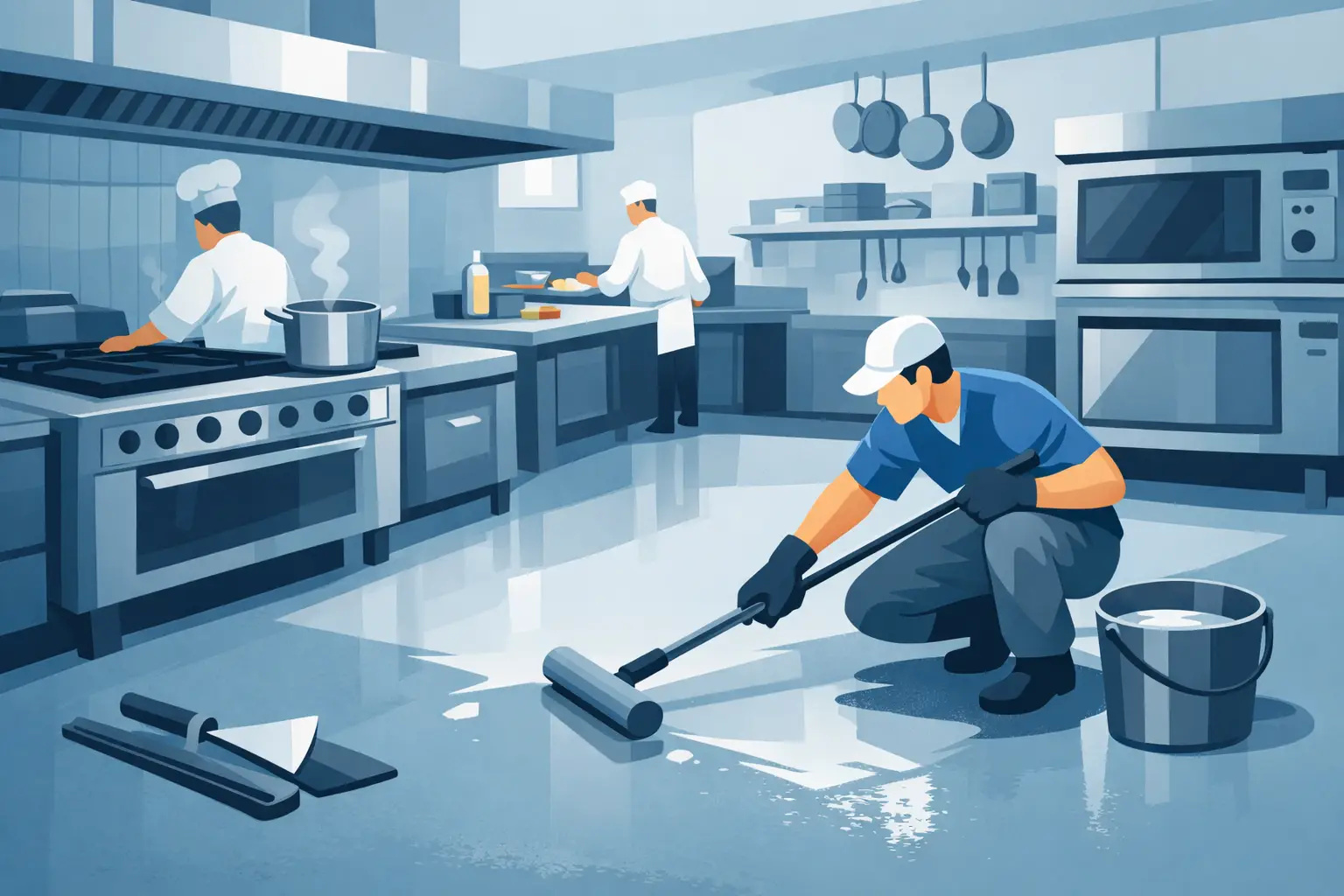
The dinner rush does not care whether a kitchen floor is peeling, slick, stained, or difficult to sanitize. A restaurant kitchen floor coating has to perform through hot oil splatter, dropped pans, rolling carts, wet mopping, chemical cleaners, and constant foot traffic without becoming another daily maintenance problem. For Indiana operators, it also has to handle moisture and temperature changes that can put weakly bonded coatings to the test.
A quality coating is more than a cosmetic upgrade. It protects the concrete underneath, supports a cleaner work environment, and gives staff a more dependable surface under pressure. The right system depends on how your kitchen operates, what reaches the floor, the condition of the slab, and how much shutdown time the business can realistically absorb.
What a Restaurant Kitchen Floor Coating Must Handle
Commercial kitchens are hard on concrete in ways a dining room or retail space is not. Grease and acidic food products can stain porous slabs. Repeated washdowns send water toward drains and into cracks. Refrigeration equipment, carts, racks, and deliveries add concentrated weight and abrasion. Over time, untreated concrete absorbs contaminants, chips at damaged edges, and becomes progressively harder to keep clean.
A properly specified floor coating creates a nonporous barrier over prepared concrete. That means spills remain on the surface longer instead of soaking into the slab, and routine cleaning becomes more efficient. It also helps prevent the dusty, worn appearance that can make an otherwise well-run kitchen look neglected.
Performance matters just as much as appearance. A commercial kitchen coating should offer strong adhesion, abrasion resistance, chemical resistance, and a texture appropriate for wet work areas. The goal is not the roughest surface possible. Excessive texture can trap grease and make scrubbing harder. The better approach is to match the aggregate and finish to the cleaning routine, drainage layout, footwear, and level of moisture in each zone.
The Floor System Should Match the Kitchen Zone
Not every square foot of a restaurant needs the same coating build. Prep lines, dish areas, walk-in entrances, dry storage, and back-of-house corridors see different conditions. Treating the entire space as one generic concrete floor often leads to compromises in traction, cleanability, or durability.
Wet and washdown areas
Dish stations, pot-wash areas, beverage stations, and locations near floor drains need special attention. These areas commonly experience standing water, detergents, food debris, and slippery conditions. A textured quartz or broadcast system can provide more grip than a smooth decorative finish while still creating a durable, cleanable surface.
Texture is only one part of the solution. The floor should also have functional drainage. A coating follows the profile of the existing concrete; it does not correct poor slope by itself. If water pools away from a drain, that issue should be addressed during project planning rather than covered over and ignored.
Prep and cooking lines
Cooking lines face heat, grease, dropped utensils, and constant movement. Here, chemical resistance and easy cleanup are especially valuable. A high-performance system can help protect the slab from staining and reduce the effort required to remove daily buildup.
The finish should be practical, not overly glossy. A lightly textured surface in a mid-tone color often hides ordinary wear better than a bright, smooth floor while giving the kitchen a clean, professional look. Solid-color systems, quartz finishes, and full-flake broadcasts each have a place, depending on the restaurant’s design goals and operating conditions.
Dry storage and back-of-house traffic lanes
Dry storage, receiving areas, and employee corridors typically need a durable surface that withstands carts, deliveries, and regular foot traffic. These areas may not need the same slip-resistant profile as a dish station, but they still benefit from a protective coating that resists abrasion and makes dust and spills easier to manage.
This is also where a consistent color system can improve the overall impression of the facility. Clean, defined back-of-house spaces communicate care to employees, inspectors, vendors, and prospective buyers.
Why Surface Preparation Decides the Outcome
The coating itself gets attention, but the concrete preparation determines whether it stays bonded. Restaurant slabs can carry years of grease, old adhesive, curing compounds, moisture, and failed paint. If those contaminants remain, even a premium coating can peel or delaminate.
Industrial-grade mechanical preparation opens the concrete surface and removes weak material so the coating can anchor correctly. Cracks, spalls, and damaged joints should be evaluated and repaired before the final system is installed. This is not the glamorous part of the job, but it is where long-term performance is won or lost.
Moisture deserves an honest assessment as well. Concrete can transmit vapor from below, particularly in older buildings or slabs without an effective vapor barrier. If moisture pressure is significant, the installer may recommend a moisture-mitigating primer or a different system build. Skipping that conversation to preserve a low initial price can create a much more expensive failure later.
Epoxy, Polyaspartic, and Quartz: What Fits a Kitchen?
Epoxy remains a proven option for commercial concrete because it can build a thick, durable protective layer with strong adhesion. It is often useful where a longer working time or specific system configuration is needed. However, some epoxy systems require more cure time and may yellow with UV exposure in areas receiving strong natural light.
Polyaspartic coatings offer fast return-to-service potential, strong adhesion when installed over properly prepared concrete, and excellent resistance to abrasion, chemicals, and UV exposure. That faster cure is a major advantage for restaurants that cannot afford a long closure. In the right conditions, a project may be installed quickly and returned to use within roughly 24 hours, though the exact timeline depends on repairs, substrate condition, temperature, humidity, and the selected system.
Quartz systems use colored aggregate broadcast into the coating to create a durable, textured finish. They are a strong option for commercial kitchens because they can improve traction and stand up to heavy activity. Decorative flake systems can also work in certain back-of-house spaces, particularly when appearance and cleanability are priorities. The best specification is based on the actual use of the space, not a one-size-fits-all product label.
Plan for Downtime Before the Work Begins
A fast installation is valuable only when it is planned around restaurant operations. Before scheduling, identify when equipment can be moved, which drains must remain accessible, and whether the work area can be isolated from food preparation. A serious coating contractor should discuss those details during the estimate, not after the crew arrives.
One-day installation can be an excellent fit for a restaurant, but it is not a promise that every floor requires the same scope. Extensive concrete repair, moisture mitigation, or difficult access may add time. Clear expectations protect the project schedule and help avoid surprises during a closure window.
It also helps to plan the restart. Give the coating its required cure time before placing heavy equipment, rolling carts, or aggressive cleaning chemicals on the surface. Staff should know which cleaning products are appropriate and how to remove grease without damaging the finish. A coated floor is low-maintenance, not no-maintenance.
Cleaning and Maintenance That Protect the Investment
Daily care is straightforward: remove food debris, clean spills promptly, and use a cleaner suited to the coating system. Avoid highly abrasive pads or unapproved degreasers that can dull the finish over time. In wet zones, keep drains clear so water is not allowed to stand unnecessarily.
Periodic inspections are worthwhile. Watch for damaged sealant at edges, worn texture in concentrated traffic lanes, or impact damage around equipment. Addressing small issues early helps maintain a sanitary, professional surface and protects the concrete beneath.
For Indiana restaurant owners and facility managers, the most dependable result comes from treating the floor as part of the operation, not an afterthought. ARQ Floor Coatings evaluates the slab, the service environment, and the required downtime to recommend a system built for Indiana conditions and real commercial use.
The right kitchen floor should make a busy shift easier: easier to clean, safer to cross, and better prepared for the next delivery, rush, and inspection. Start with the concrete you have, be realistic about the conditions it faces, and choose a coating system engineered to outperform long after opening night.