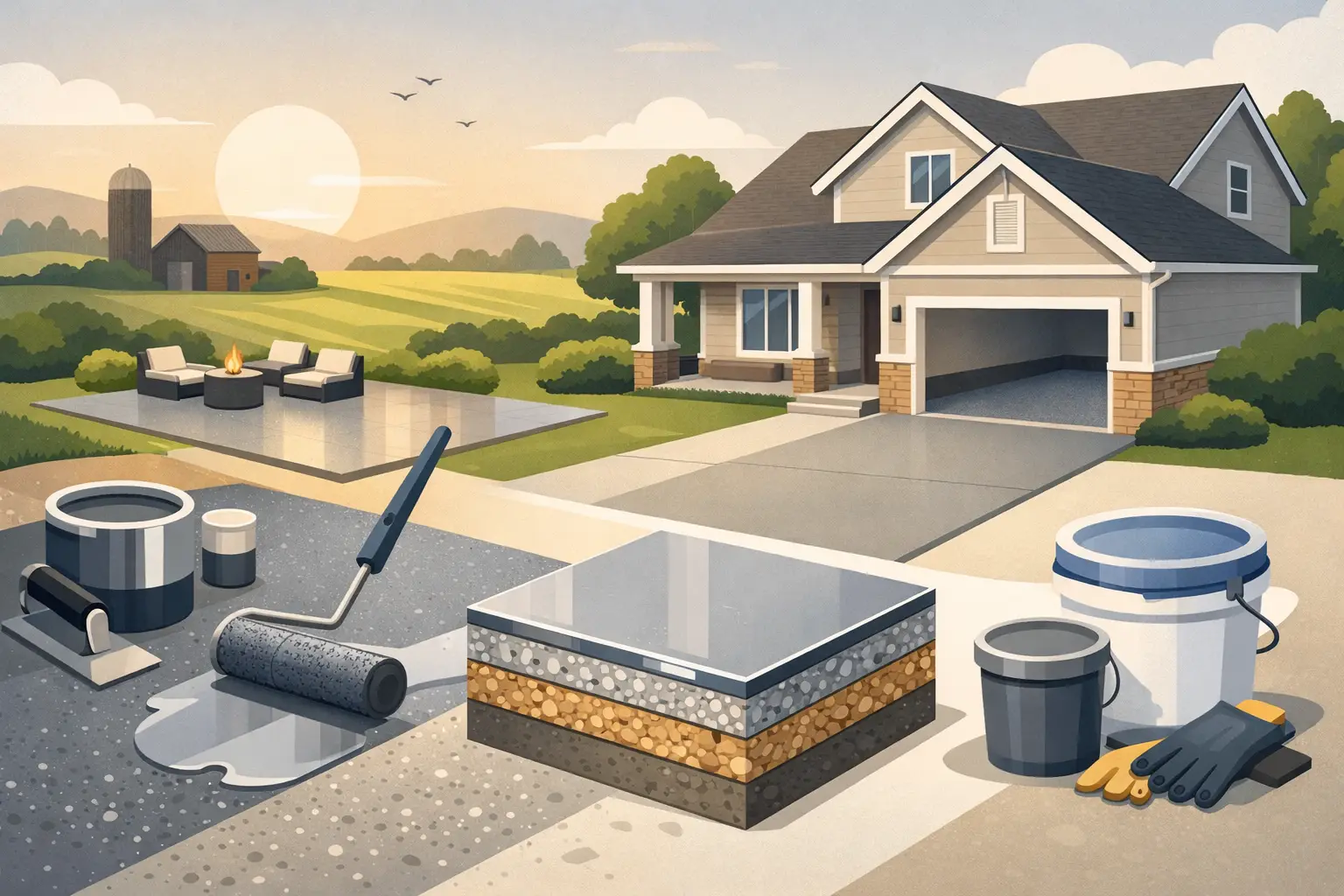
A garage floor can look clean when the doors are down, then reveal tire marks, salt stains, peeling paint, and hairline cracks the moment spring arrives. That is the real starting point for a residential concrete coating guide: not choosing a color first, but understanding what your concrete must withstand in Indiana. Freezing winters, humid summers, rain, UV exposure, road salt, and daily vehicle traffic all put ordinary concrete under pressure.
A professionally installed coating turns a porous, difficult-to-clean slab into a surface built for daily use. The right system protects the concrete, improves appearance, and makes cleanup far easier. But coating performance depends on matching the material and preparation process to the space – especially when the space moves between wet, cold, hot, and heavily used conditions.
Residential Concrete Coating Guide: Start With the Surface
Concrete may look solid, but it is naturally porous. Water, de-icing salt, oil, fertilizer, and household chemicals can work into the slab over time. In garages, melting snow and salt carried in on vehicles are common sources of deterioration. On patios and pool decks, standing water, sunlight, and foot traffic create a different set of demands.
Before any coating is selected, the concrete needs an honest assessment. A quality installer checks for surface damage, contamination, moisture concerns, existing failed coatings, and cracks. Small non-structural cracks can often be repaired as part of the preparation process. Active movement, severe spalling, drainage problems, or structural cracking may need to be addressed before coating work begins.
This step matters because coatings do not fix failing concrete by themselves. They protect a properly prepared substrate. Applying a finish over weak, dirty, or moisture-affected concrete can lead to poor adhesion, bubbling, or peeling later. A no-surprise quote should account for the actual condition of the slab, not just its square footage.
Choose a Coating System for the Way You Live
Not every residential coating has the same purpose. Paint-store epoxy kits can improve appearance temporarily, but they typically lack the surface preparation, build thickness, chemical resistance, and long-term adhesion of a professionally installed system. For Indiana homes, the material needs to stand up to more than a few parked cars.
Polyaspartic coatings for fast, durable protection
Polyaspartic technology is a strong fit for many residential garages, patios, and other high-use spaces. It cures quickly, allowing many projects to be installed in a single day and ready for normal use soon after. That shorter installation window is valuable when you do not want your garage or entry area out of service for a week.
A properly specified polyaspartic system also offers strong adhesion, abrasion resistance, chemical resistance, and UV stability. UV stability is particularly useful outdoors, where some coating materials can yellow or fade with prolonged sun exposure. For a garage, polyaspartic protection helps resist tire marks, automotive fluids, road salt, and repeated wet-dry cycles.
Fast cure does not mean rushed work. It means the crew must work with industrial-grade precision. Surface preparation, repair, basecoat application, decorative broadcast, and topcoat timing all need to be managed correctly for the system to perform as designed.
Epoxy systems where the conditions fit
Epoxy remains a proven coating material and can be an excellent choice in the right environment. It provides a durable, attractive base for many decorative floor systems and is well suited to certain indoor applications. However, traditional epoxy may be more sensitive to UV exposure and can take longer to cure than polyaspartic alternatives.
The best choice depends on the location, available installation time, desired finish, and expected exposure. A conditioned interior room has different needs than a sun-exposed patio or an attached garage that sees salt, slush, lawn equipment, and heavy storage. Good recommendations are specific to the surface, not based on a one-product answer.
Decorative flakes, quartz, metallics, and solid colors
Performance comes first, but a coating should also fit the property. Full-flake floors are a popular garage choice because their layered appearance helps disguise dust and everyday debris while creating a finished, showroom-quality surface. Flake blends range from neutral gray and tan combinations to bolder custom looks.
Quartz systems can add texture and durability where traction and appearance matter, including select outdoor spaces. Metallic finishes create a more dramatic, marbled look for interiors, while solid-color systems offer a clean, modern result. The finish should support how the area is used, rather than asking you to work around it.
Preparation Is What Makes a Coating Last
The strongest topcoat cannot compensate for poor preparation. Professional installation begins by mechanically profiling the concrete, commonly through diamond grinding. This opens the surface and creates the texture needed for the coating to bond deeply to the slab.
Grinding also removes weak concrete at the surface, old paint, adhesives, and contaminants that can interfere with adhesion. A crew may then fill cracks, pits, and joints as appropriate for the coating design. The floor is cleaned thoroughly before the basecoat is applied.
Be cautious with promises that a floor only needs an acid wash or a quick pressure wash. Those methods may not remove embedded contaminants or create a consistent profile across the slab. Industrial-grade surface preparation takes more equipment and expertise, but it is one of the clearest differences between a floor that performs for years and one that starts failing after a season or two.
Match the Finish to Each Residential Space
A garage is usually the most demanding residential application. It needs chemical resistance, easy cleanup, and protection from road salt and hot tires. A full-flake polyaspartic system gives homeowners a durable finish that can handle vehicles, tools, storage cabinets, bicycles, and weekend projects without looking like unfinished utility space.
Patios need weather resistance and a finish that complements the home rather than competing with it. Because outdoor slabs are exposed to rain and sunlight, UV-stable materials and a texture appropriate for foot traffic should be part of the conversation. The same principle applies to pool decks, where wet feet and splash zones make slip resistance a practical safety consideration.
Driveways deserve a more careful evaluation. They face direct sun, rain, snow, salt, turning tires, and substantial temperature movement. The coating system, substrate condition, drainage, and expected vehicle use all matter. A professional assessment can determine whether a protective coating is appropriate or whether repairs and another concrete treatment should come first.
Basements, laundry rooms, workshops, and home gyms have their own requirements. These spaces may benefit from a cleanable, decorative floor, but moisture testing is especially relevant below grade. If vapor transmission is not evaluated, a beautiful basement floor can develop adhesion problems from pressure beneath the slab.
Plan for Texture, Maintenance, and Real Use
A coated floor is low maintenance, not no maintenance. Regular sweeping keeps grit from acting like sandpaper under shoes and tires. For deeper cleaning, use a soft broom or mop with a mild cleaner recommended for coated floors. Clean spills promptly, especially oils, chemicals, and automotive fluids.
Texture is another trade-off worth discussing. More texture can improve traction in wet areas, but it can also make a floor slightly less smooth to mop. A garage storing classic cars may prioritize a flatter finish, while a pool deck or covered patio may benefit from added slip resistance. The right balance depends on the people, pets, footwear, vehicles, and weather the surface sees every day.
Avoid dragging sharp metal items across the floor, and use protective pads beneath especially heavy equipment when practical. High-performance coatings are built to take abuse, but reasonable care preserves the finish and keeps it looking its best.
Questions to Ask Before Hiring a Coating Contractor
The estimate should explain more than color options and a final price. Ask how the concrete will be prepared, how cracks and damaged areas will be handled, what coating materials will be installed, and how long the space will be unavailable. You should also ask whether the system is suited for UV exposure, moisture, road salt, and your specific application.
A contractor should be able to explain the installation process in plain language, identify limitations before work begins, and provide clear warranty information. Local experience matters because Indiana concrete is not dealing with a mild, predictable climate. It needs a system built for freeze-thaw cycles, humidity, salt, and the pace of real family life.
ARQ Floor Coatings approaches each project as a complete surface system, from evaluating the slab to preparing it correctly and installing a finish designed to outperform ordinary concrete. For homeowners, that means a clearer path from a stained or deteriorating floor to a surface that looks finished and works harder.
Your concrete is part of how you use your home every day. Give it a coating system that is prepared for the next salt-covered vehicle, summer gathering, muddy shoes, and hard-working weekend – then enjoy a surface that is easier to live with in every season.