A garage floor can look finished by lunchtime and be ready for traffic the next day, but only if the coating system fits the slab, the weather, and how the space is used. In the conversation around polyurea vs polyaspartic coatings, the right answer is rarely a simple product label. Both technologies can outperform conventional paint and many basic epoxy systems. The difference comes down to chemistry, installation control, exposure, and the condition of the concrete underneath.
For Indiana garages, patios, commercial spaces, and exterior concrete, that distinction matters. A floor has to handle freeze-thaw cycles, humidity, wet tires, road salt, UV exposure, dropped tools, chemicals, and daily traffic without becoming a maintenance project.
Polyurea vs Polyaspartic Coatings: Start With Chemistry
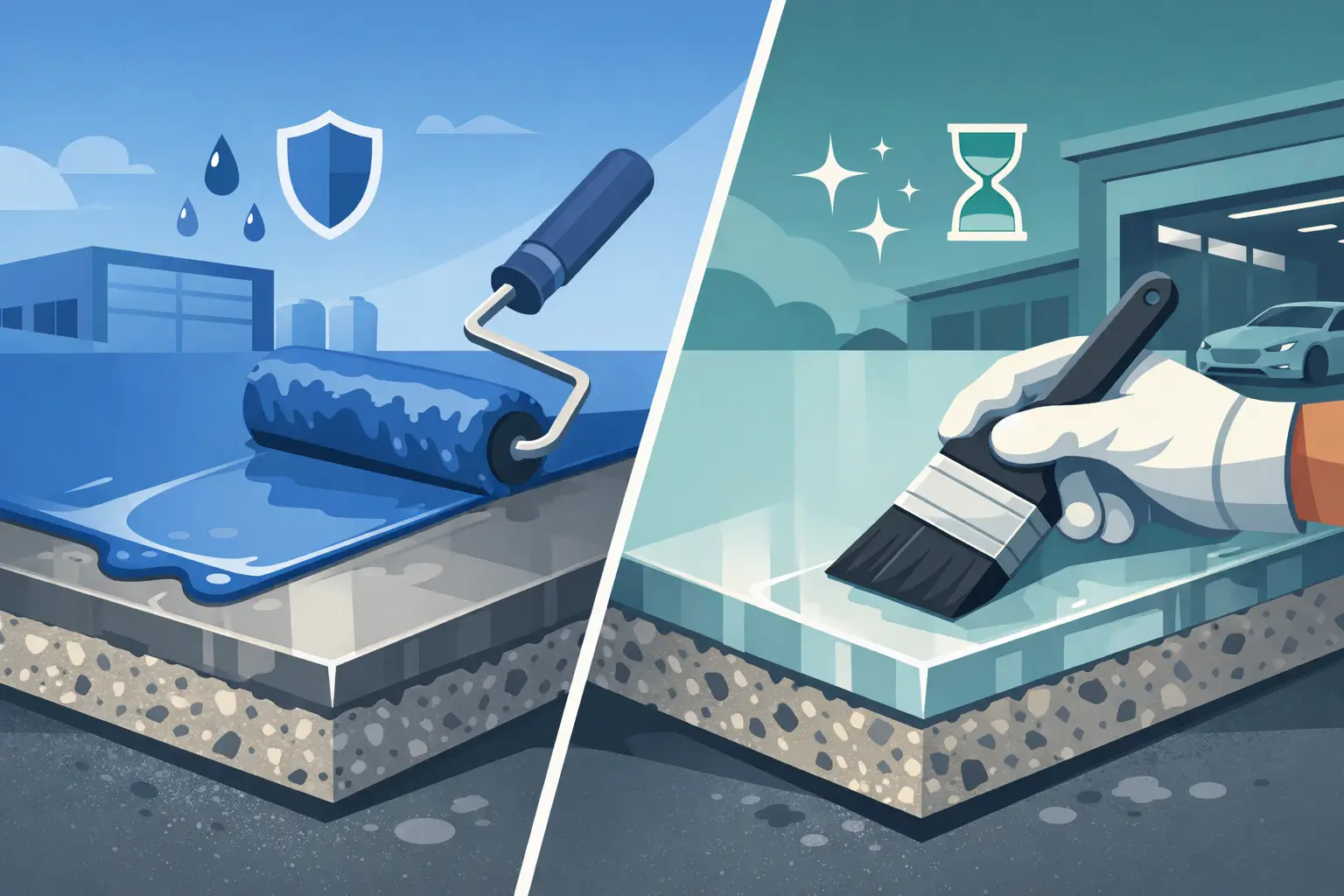
Polyurea is a fast-curing coating chemistry created when an isocyanate component reacts with an amine resin. It is valued for strong adhesion, flexibility, chemical resistance, and an exceptionally fast return to service. In industrial settings, polyurea has long been used where speed and protection are critical.
Polyaspartic is a specialized form of polyurea chemistry. It was developed to give installers more control over the reaction and working time while retaining the performance advantages that make polyurea attractive. That extra working window is a major reason polyaspartic coatings have become a leading choice for decorative residential and commercial concrete floors.
The terms are sometimes used loosely in the coating industry. A contractor may describe a system as polyurea when its base coat is a fast-setting polyurea, then use a UV-stable polyaspartic topcoat. Another system may use polyaspartic materials throughout. What matters is not just the word on the proposal. It is the complete system, including concrete preparation, crack repair, moisture conditions, coating build, decorative broadcast, and topcoat selection.
The Biggest Difference Is Working Time
Traditional fast-set polyurea can cure so quickly that installation requires specialized equipment, experienced crews, and tight control over timing. That speed is useful on certain industrial projects, but it can make broad, decorative floor applications more demanding. Once material is mixed, there is little room to correct uneven coverage or adjust a decorative flake broadcast.
Polyaspartic coatings generally provide a more manageable pot life. Installers have enough time to spread the material consistently, build proper film thickness, and achieve a cleaner decorative finish before the coating begins to set. They still cure far faster than many traditional epoxies, which is why a properly planned system can often be installed in one day.
Fast curing is not automatically better. A coating that sets too quickly for the conditions can create application problems. A coating that cures too slowly can leave a property exposed to dust, moisture, or downtime. The best choice balances production speed with enough open time for industrial-grade precision.
UV Stability Makes a Real Difference Outdoors
Sunlight is one of the clearest dividing lines between coating chemistries. Some aromatic polyurea products can amber or yellow when exposed to UV light. That color shift may not affect the protective function of the floor, but it matters on a garage floor, patio, pool deck, entryway, or showroom where appearance is part of the investment.
Polyaspartic topcoats are commonly aliphatic and UV-stable. They are formulated to hold their color and gloss much better under regular sun exposure. This makes them especially practical for Indiana properties with open garage doors, sun-facing patios, exterior walkways, and commercial entrances.
That does not mean every polyaspartic product performs the same way. Product quality, pigment selection, texture, film thickness, and exposure level all affect long-term appearance. Still, for decorative surfaces that see daylight, a UV-stable polyaspartic finish is often the smarter direction.
Adhesion Depends More on Preparation Than the Label
A high-performance coating cannot compensate for weak surface preparation. Concrete may look solid while holding contaminants, old sealers, tire residue, laitance, moisture vapor, or weak surface paste that prevents a lasting bond.
The correct process starts with evaluating the slab. Cracks, spalling, moisture concerns, oil contamination, and previous coatings should be addressed before material is applied. Mechanical grinding opens the concrete profile so the coating can penetrate and anchor into the substrate. This is not a cosmetic step. It is the foundation of adhesion.
Both polyurea and polyaspartic coatings can bond exceptionally well to properly prepared concrete. Neither should be applied over a smooth, unprofiled slab simply because it is clean. A no-prep or acid-wash-only approach may be tempting, but it does not provide the same dependable mechanical bond for floors exposed to hot tires, salt, impact, and temperature changes.
For ARQ Floor Coatings, surface preparation is where durable results begin. The finish customers see is only as dependable as the concrete profile and repair work beneath it.
How They Handle Indiana Weather and Daily Abuse
Indiana concrete deals with more than ordinary foot traffic. Winter brings road salt, slush, and repeated temperature swings. Spring and summer bring rain, humidity, and moisture. Garages see hot tires, oil drips, lawn equipment, and dropped tools. Warehouses and restaurants may add rolling loads, cleaning chemicals, grease, and frequent washdowns.
Polyurea-based and polyaspartic systems are both well suited to demanding environments because they cure into dense, protective surfaces with strong resistance to abrasion and many common chemicals. Their flexibility can also be valuable as concrete expands and contracts through seasonal changes.
The application matters as much as the chemistry. A garage floor may need a full decorative flake broadcast and durable clear topcoat for a clean, easy-to-maintain finish. A pool deck or exterior walkway may need a texture that improves traction when wet. A warehouse may require a system designed around traffic patterns, impact, slip resistance, and downtime. There is no one coating formula that is best for every slab.
Cost, Downtime, and Long-Term Value
Polyaspartic and polyurea floor systems usually cost more upfront than a basic DIY epoxy kit or concrete paint. That price reflects professional grinding, repairs, high-performance materials, labor, and a multi-layer system built for long service life.
The value shows up when the floor is easier to clean, resists staining, holds up to traffic, and avoids the peeling or chipping that forces early replacement. Rapid cure time also reduces disruption. For homeowners, that can mean getting the garage back quickly. For a restaurant, retail space, or commercial facility, it can mean less interruption to operations.
Be cautious with comparisons based only on square-foot pricing. A lower quote may omit grinding, crack repair, a full flake broadcast, moisture testing, or a protective topcoat. Ask what preparation method is included, which materials are used in each layer, how the surface will perform in UV exposure, and when it can return to service.
Which Coating Is Right for Your Project?
For many decorative garage, patio, showroom, and commercial floor applications, a polyaspartic system is the practical choice because it combines fast installation, UV stability, attractive finish options, and strong everyday protection. It is particularly effective when appearance matters as much as durability.
A fast-setting polyurea base coat may be the right component when rapid cure, flexibility, and strong substrate bonding are priorities. In many premium systems, the strongest answer is not polyurea or polyaspartic. It is a carefully matched system that uses each material where it performs best.
The decision should begin with the concrete, not a color chip. Consider whether the area is indoors or outdoors, how much sunlight it receives, whether moisture is present, how soon it must reopen, and what traffic it will carry. A qualified local coating contractor can assess those details before recommending a finish.
A well-built floor should make daily life easier, whether it is catching salty winter runoff in a Carmel garage or keeping a busy Indianapolis workspace clean and professional. Start with an honest assessment of the slab, choose a system engineered for its conditions, and the finished surface will have a far better chance of outperforming the season ahead.