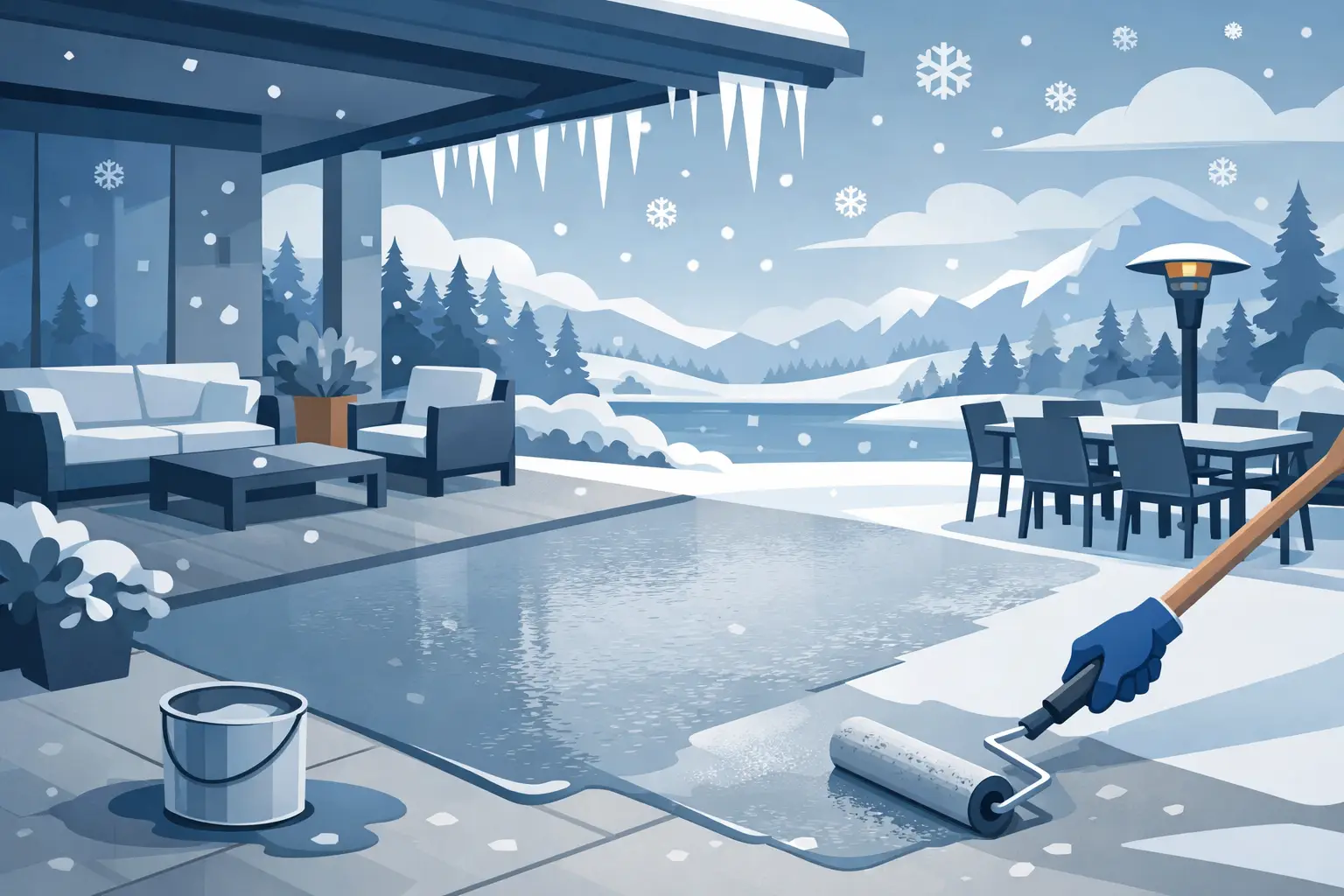
A patio can look fine in October and start shedding its surface by spring. In Indiana, water works into small concrete pores and cracks, freezes, expands, then repeats the process through every thaw. The right patio coating for freezing temperatures does more than improve color or hide stains. It creates a protective system that helps concrete handle moisture, salt, UV exposure, foot traffic, and the temperature swings that define a Midwest winter.
A coating is not a cure for failing concrete, though. Long-term performance depends on matching the material to the patio’s condition, preparing the slab correctly, and addressing drainage or structural issues before the coating goes down.
Why freezing weather is hard on patio concrete
Concrete is durable, but it is not waterproof. Its porous surface absorbs moisture from rain, snowmelt, wet furniture, planters, and runoff. When trapped moisture freezes, it expands inside the concrete. Over time, that pressure can create surface scaling, pop-outs, cracks, and flaking.
The freeze-thaw cycle is only part of the problem. Indiana patios also see de-icing salt, muddy boots, grill grease, leaf tannins, humidity, and strong summer sun. A thin decorative paint may make the surface look better briefly, but it often cannot maintain adhesion as the slab moves through seasonal changes. Once water gets beneath a weak coating, peeling can spread quickly.
A high-performance coating system is designed to limit that exposure. It bonds to properly prepared concrete, seals the surface against many common contaminants, and provides a finish that is easier to clean than bare concrete. The goal is not to make a patio indestructible. It is to give the slab a far stronger line of defense against the conditions it faces every day.
What a patio coating for freezing temperatures needs to do
Outdoor concrete needs a different standard than an interior decorative floor. A suitable system must adhere aggressively, tolerate thermal movement, stand up to moisture exposure, and remain stable in sunlight.
Strong adhesion starts below the coating
No topcoat can compensate for poor surface preparation. Concrete collects invisible contaminants, weak laitance, old sealers, and dirt that interfere with bonding. Industrial-grade diamond grinding opens the concrete profile and removes weak material so the coating can anchor into a sound surface.
This is one reason do-it-yourself roll-on products frequently disappoint outdoors. They may be applied over a surface that has only been pressure washed or acid etched. The patio can look fresh at first, but the coating is only as reliable as the bond beneath it.
Moisture and freeze-thaw resistance
A patio coating should help protect the concrete from surface water while retaining the adhesion needed to manage real-world weather changes. Polyaspartic systems are particularly well suited to Indiana conditions because they cure quickly, bond strongly to prepared concrete, and deliver excellent resistance to moisture, chemicals, and abrasion.
However, coating an actively failing slab is not the answer. If a patio has major heaving, severe spalling, persistent water pressure from below, or large moving cracks, those issues need a professional assessment first. Coatings protect sound concrete. They cannot stop soil movement or turn a structurally compromised slab into new concrete.
UV stability for an exposed surface
Patios spend their lives in direct sunlight. Some traditional epoxy coatings can amber or fade when exposed to UV light, especially in open, sunny areas. A UV-stable polyaspartic topcoat is a better fit for outdoor applications because it helps the finished color and flake blend maintain their appearance through bright summers as well as hard winters.
A safer texture when the patio is wet
A glossy patio may look sharp, but slickness matters around pools, entry doors, steps, and outdoor kitchens. Decorative flake and quartz systems add texture that improves traction while still making the surface easy to sweep and rinse. The right amount of texture depends on the use of the space. A covered patio with light foot traffic may need a different finish than a pool deck that stays wet through the summer.
Polyaspartic vs. epoxy for outdoor patios
Both epoxy and polyaspartic products have a role in concrete coating systems, but they are not interchangeable. Epoxy is known for its strength and can perform well as part of a multi-layer system. On an exterior patio, though, UV exposure and installation conditions make the topcoat selection especially important.
Polyaspartic technology brings several advantages for outdoor concrete. It is UV-stable, fast-curing, highly durable, and resistant to many chemicals and stains. Its rapid cure also helps reduce the window when wind-blown debris, unexpected weather, or jobsite traffic can affect a fresh installation. For many residential patios, that means less disruption and a surface that can return to service quickly.
The trade-off is that fast-curing materials require experienced installation. The crew needs to manage surface preparation, crack repair, moisture conditions, mixing, application timing, and broadcast coverage with precision. This is not a place to choose a coating based on a single product claim or the lowest initial price.
The patio condition matters as much as the coating
Before recommending a finish, a contractor should evaluate the patio itself. Hairline cracks, small chips, and cosmetic surface wear can often be repaired as part of the preparation process. Larger cracks require a closer look. Some are stable shrinkage cracks; others indicate movement that may continue after coating.
Drainage deserves equal attention. If water pools against the home or stands on the patio for long periods, fix the drainage issue before investing in a coating. A durable coating will make cleanup easier, but it should not be expected to solve improper slope, gutter discharge, or landscape grading.
Watch for these conditions before moving forward:
- Widespread flaking or spalling that leaves weak concrete at the surface
- Standing water after normal rain or snowmelt
- Cracks with vertical displacement or signs of ongoing movement
- Previous coatings or sealers that are peeling, soft, or poorly bonded
An honest inspection prevents a good coating system from being asked to do work it was never designed to do.
Choosing a finish that works with your patio
The best patio finish should fit both the architecture of the home and the way the area is used. Full-flake systems are a popular choice because they create a finished, speckled appearance that disguises dust, pollen, and minor debris better than a solid color. They also provide practical texture for outdoor use.
Quartz systems can be an excellent option for areas that need added slip resistance and a more uniform, durable finish. Solid-color coatings offer a clean, modern look but may show dirt, leaves, and wear more readily depending on the color selected. Lighter finishes can stay visually cooler in full sun, while medium-tone blends often do a better job concealing everyday mess.
For a patio connected to a pool, grill station, or heavily used back entrance, prioritize traction, cleanability, and stain resistance over a perfectly smooth appearance. A well-designed finish should look intentional while making the space easier to live with.
Installation timing in an Indiana climate
Cold-weather performance does not mean every coating should be installed during freezing weather. Coating materials have specific application requirements for concrete temperature, ambient temperature, humidity, and moisture conditions. A professional team schedules the work around those requirements rather than forcing an installation onto an unsuitable day.
The good news is that advanced polyaspartic systems provide more flexibility than many conventional coatings. With the right preparation and conditions, installation can move quickly, often on a one-day schedule. That speed matters for homeowners who do not want a patio blocked off for a week and for commercial properties that need to limit downtime.
After installation, follow the care instructions for returning furniture, grills, and foot traffic to the space. Avoid dragging heavy metal furniture across the surface, use protective pads where appropriate, and rinse away road salt or de-icing residue that gets tracked onto the patio. These are simple habits, but they protect both the finish and the concrete underneath.
A better long-term answer than paint or sealer
Clear sealers and patio paints have a place for short-term refreshes, but they usually require more frequent reapplication and may not offer the same level of adhesion, UV stability, or abrasion resistance as a professionally installed coating system. Their lower upfront cost can become less attractive when peeling, fading, and repeated prep work enter the picture.
For homeowners and property owners who want a patio built for Indiana, a professionally prepared polyaspartic coating system offers a more durable path. ARQ Floor Coatings pairs industrial-grade surface preparation with UV-stable, high-performance finishes designed to outperform bare concrete through winter moisture, summer sun, and everyday use.
Your patio should be a place to use after a snowfall melts, not another spring repair project. Start with an evaluation of the concrete, choose a finish suited to the space, and let the condition of the slab guide the solution.