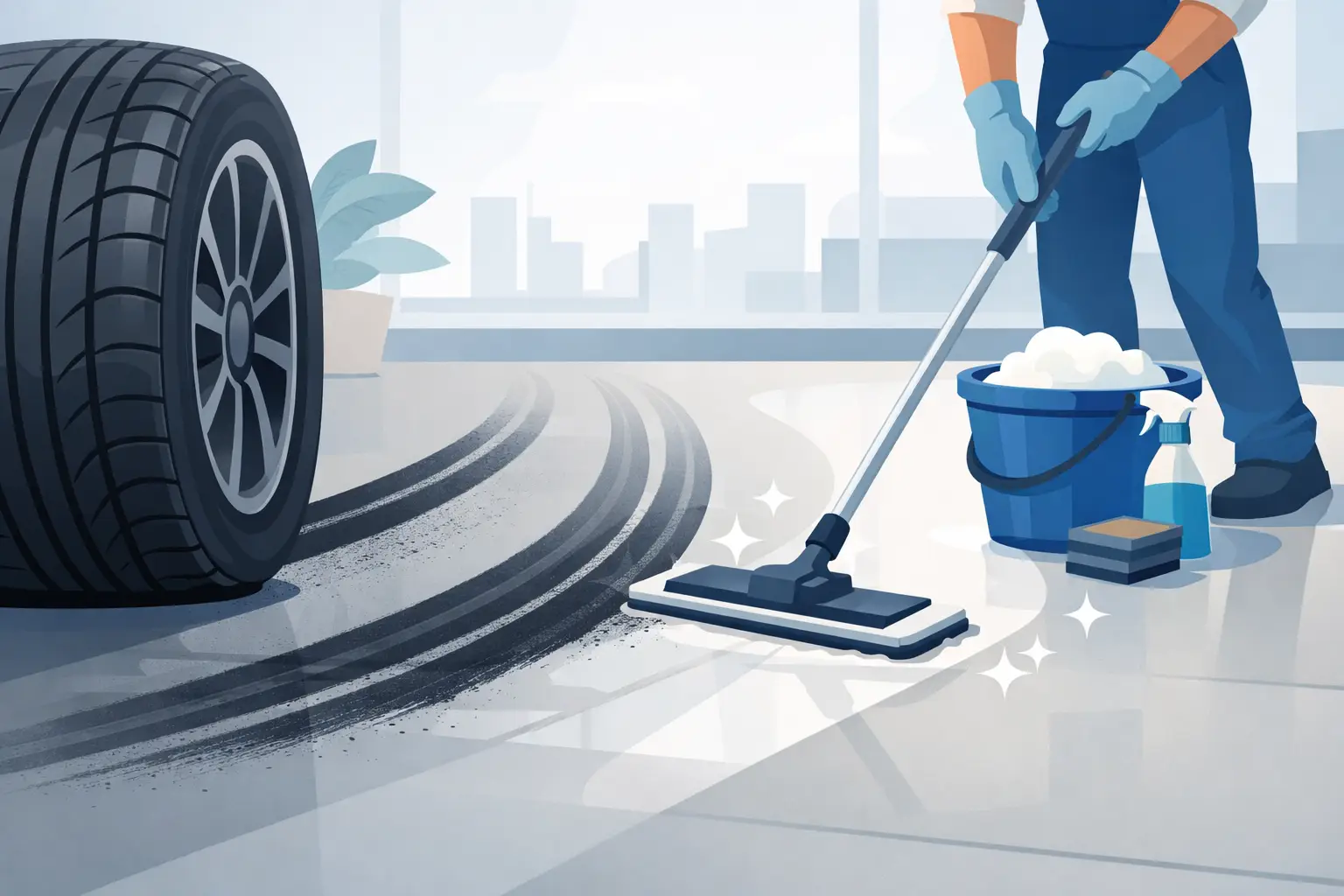
A dark tire mark can make an otherwise clean garage or showroom floor look neglected in minutes. In Indiana, the problem gets worse after winter driving, when warm tires carry in road salt, grime, moisture, and rubber residue. Knowing how to remove tire marks from floors starts with understanding what is actually on the surface – and choosing a cleaning method that will not damage the concrete or its protective coating.
Tire marks are not always just dirt. They can be a transfer of softened rubber, carbon black, tire additives, and road film that bonds to a floor under heat and pressure. The wrong cleaner, abrasive pad, or aggressive solvent may remove the mark, but it can also dull a coating, weaken a sealer, or roughen bare concrete so future stains grab on even faster.
Why Tire Marks Stick to Garage and Shop Floors
When a vehicle is driven, the tires heat up and become more flexible. Pull into a garage, warehouse, or service bay, and that warm rubber meets a cooler floor under the full weight of the vehicle. Rubber compounds and plasticizers can transfer onto the surface, especially when the floor has open pores, worn sealer, or a low-quality coating.
Bare concrete is particularly vulnerable. It is naturally porous, so rubber residue and road grime can settle below the surface instead of sitting on top where a quick mop can remove them. Older concrete may also have uneven wear, oil contamination, or rough patches that trap black marks.
Coated floors can show tire transfer too, but a properly installed polyaspartic or epoxy system is much easier to maintain. The coating creates a dense, nonporous barrier between the concrete and contaminants. With the right cleaner and a soft scrub, most marks release without becoming a permanent part of the floor.
How to Remove Tire Marks From Floors Step by Step
Start with the least aggressive method that can do the job. This protects the finish and helps you identify whether the mark is surface-level rubber transfer or a deeper stain in unprotected concrete.
Clear loose grit before you scrub
Sweep or vacuum the area first. Sand, road salt, and small stones can act like sandpaper when dragged under a brush or mop. This step matters on decorative flake floors, metallic coatings, and polished concrete, where unnecessary abrasion can reduce the floor’s appearance over time.
If the mark is in a garage, pay attention to the tire path near the door. That is where winter debris and moisture often collect. A dry microfiber mop works well for light dust, while a shop vacuum is useful for textured coatings and expansion joints.
Use warm water and a pH-neutral floor cleaner
Mix a pH-neutral cleaner according to its label directions, then apply it to the tire marks. Let it sit for several minutes so it can loosen the rubber residue. Do not let the solution dry completely on the floor.
Work the area with a soft nylon brush, microfiber pad, or non-abrasive scrub pad. Use moderate pressure and small circular motions. On a quality coating, the goal is to lift the residue from the surface, not grind it away.
Rinse with clean water and dry the area with a squeegee, mop, or towels. On garage floors, standing water can carry loosened grime back into the coating texture or toward the walls. Commercial facilities should use a floor scrubber with clean recovery water when cleaning larger traffic lanes.
Step up to a coating-safe degreaser when needed
If warm water and a neutral cleaner do not remove the mark, use a water-based degreaser labeled safe for your floor type. This is often the right next step for garages where tire transfer mixes with oil, salt residue, or driveway grime.
Apply the degreaser to a small test area first. Give it a few minutes of dwell time, scrub with a soft nylon brush, and rinse thoroughly. Strong products can leave a slippery film if they are not fully rinsed, so do not skip this part.
On bare concrete, a degreaser can remove surface grime and improve the mark’s appearance, but it may not erase deeply absorbed discoloration. That is the trade-off with unprotected concrete: cleaning can help, but the material remains open to future staining.
Treat stubborn rubber transfer carefully
For isolated, stubborn marks on a coated floor, a manufacturer-approved rubber-mark remover may be appropriate. Use it sparingly and only after testing it in an inconspicuous spot. Some solvent-based products can soften, haze, or discolor certain coatings, particularly older epoxy systems or DIY finishes with limited chemical resistance.
Avoid pouring strong solvents directly onto the floor. Products such as acetone, lacquer thinner, gasoline, and brake cleaner can create bigger problems than the tire mark itself. They may attack the coating, release strong fumes, create a fire risk, or pull contaminants deeper into bare concrete.
If a mark remains after careful cleaning, it may be a coating issue rather than a cleaning issue. Soft, improperly cured, worn, or poorly bonded coatings can hold tire residue more aggressively. In that case, repeated scrubbing is not a long-term solution.
What Not to Use on Tire Marks
Harsh methods can turn a manageable cleaning job into a refinishing project. Avoid wire brushes, steel wool, sanding discs, and aggressive abrasive pads on coated floors. They can scratch the finish, flatten decorative texture, and create dull spots that stand out more than the original tire mark.
Acid cleaners are also a poor choice for most garage, patio, warehouse, and showroom floors. Acids can etch bare concrete and compromise some coating systems. Bleach may help with organic stains, but it is not designed to dissolve tire rubber and can leave residue or affect color if used incorrectly.
Pressure washing indoors is rarely the answer. It can force dirty water into joints, wall edges, drywall, and areas that are difficult to dry. For outdoor concrete, pressure washing may be useful after a cleaner has loosened the mark, but use controlled pressure and keep the nozzle moving to prevent surface damage.
Tire Marks on Coated Floors vs. Bare Concrete
The best approach depends on the condition of the floor. A professionally installed polyaspartic floor is designed for daily vehicle traffic, chemical exposure, moisture, and temperature changes. Tire marks generally stay near the surface and respond well to routine maintenance.
An older epoxy floor can require more caution. Some epoxy products are more prone to hot-tire pickup, yellowing, and surface wear, especially in garages that see direct sunlight or dramatic temperature swings. If the coating feels tacky, peels near tire paths, or lifts when you clean it, stop using strong products and have the floor evaluated.
Bare concrete gives you fewer cleaning options because the tire residue can penetrate. A deeper clean may lighten the stain, but the floor will continue collecting tire marks, oil spots, salt residue, and moisture until it is properly protected. A high-performance coating changes the maintenance equation by sealing the concrete beneath a durable, cleanable surface.
Prevent Tire Marks Before They Build Up
You cannot eliminate tire transfer from every vehicle, especially with performance tires, heavy trucks, and tires that use softer rubber compounds. You can reduce buildup by cleaning the floor regularly and not allowing salt, wet road film, and automotive residue to sit after a storm.
For residential garages, sweep weekly during winter and clean the tire paths as needed. Place absorbent mats near entry doors, but do not rely on mats to protect the entire floor. They can hold moisture beneath them if left in place for long periods.
For warehouses, showrooms, auto service areas, and commercial spaces, establish a maintenance schedule based on traffic. High-traffic lanes may need frequent auto-scrubbing with a coating-safe cleaner, while lower-traffic areas can be maintained less often. The right schedule protects appearance, improves traction, and helps staff spot leaks or surface damage early.
Long-term protection comes down to surface preparation and coating quality. ARQ Floor Coatings installs polyaspartic floor systems built for Indiana conditions, using industrial-grade concrete preparation and durable finishes that stand up to vehicle traffic, road salt, moisture, and daily cleaning.
A clean floor should not require harsh chemicals or hours of scrubbing. If tire marks keep returning, the concrete may be telling you it needs more than another cleaner – it may be time for a surface engineered to outperform and outlast the conditions around it.