A few shallow holes in a garage floor or driveway can look like a cosmetic problem. In Indiana, they are often the first visible sign that water, road salt, and freeze-thaw pressure are breaking down the concrete surface. To fix concrete pitting correctly, you need to stop treating the holes alone and address the conditions that created them.
A durable repair starts with an honest assessment. Some pitting can be patched and protected for years. Other surfaces have widespread scaling, moisture problems, or structural damage that call for more extensive concrete repair before any coating is installed. The right approach depends on the depth of the damage, the condition of the slab, and where the concrete is used.
What Concrete Pitting Looks Like and Why It Happens
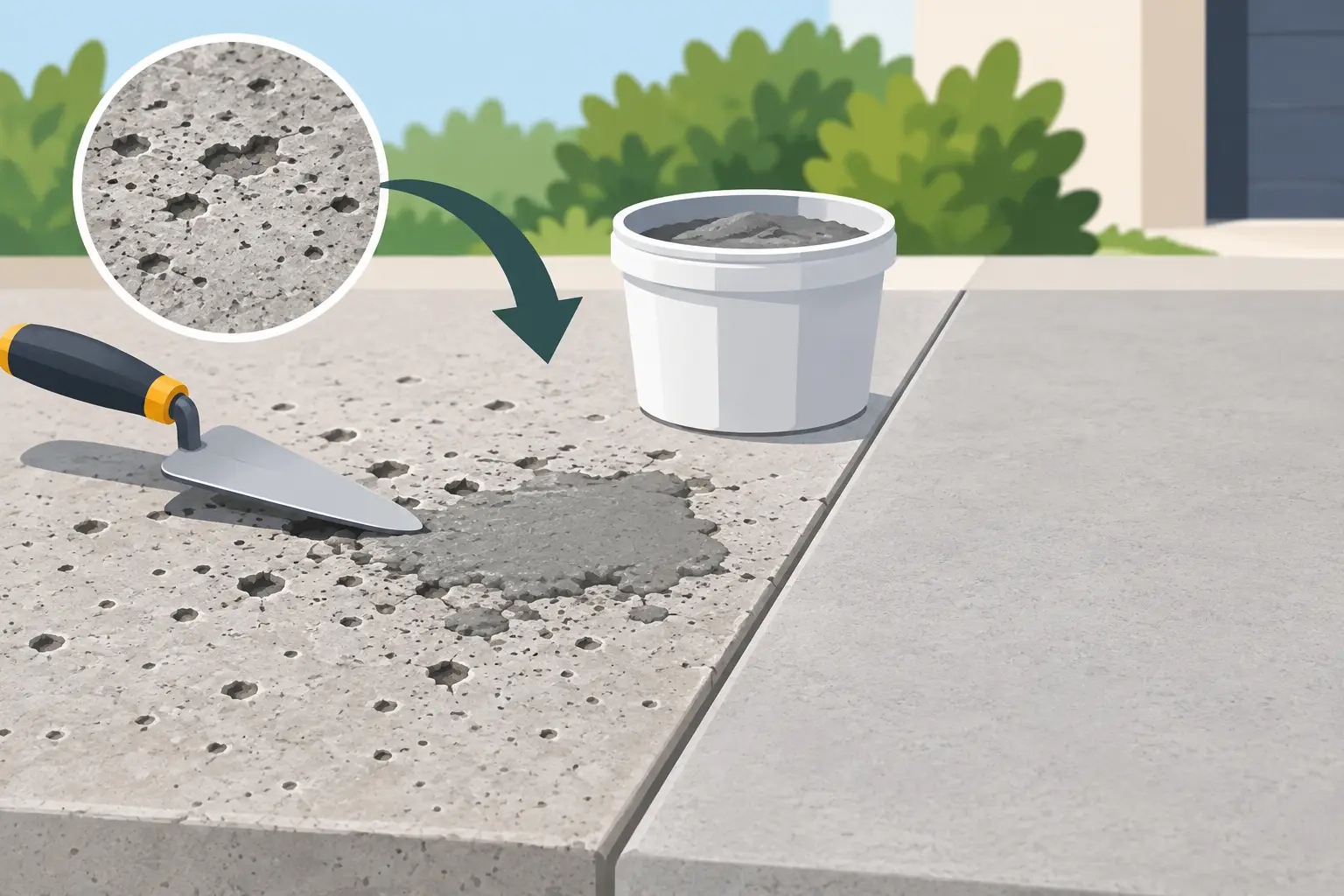
Concrete pitting is a pattern of small holes, shallow craters, or missing spots in the top layer of a slab. It is common on garage floors, driveways, patios, warehouse traffic lanes, and entryways exposed to deicing products. Early-stage pits may be only a fraction of an inch deep. Left exposed, they collect water, dirt, salt, and chemicals, allowing the damaged area to expand.
Indiana weather is especially hard on unprotected concrete. Water enters tiny pores and hairline cracks, then freezes and expands during cold weather. When temperatures rise, the concrete thaws and absorbs more moisture. Repeated freeze-thaw cycles gradually weaken the surface paste that holds the slab together.
Road salt accelerates the problem. Salt-laden slush carried in by vehicles can sit on a garage floor for days, while deicing products on sidewalks and driveways draw moisture into the concrete. In commercial settings, heavy carts, forklifts, dropped tools, oil, cleaning chemicals, and constant foot traffic can wear away an already weakened surface.
Poor installation can also contribute. Concrete that was finished improperly, cured too quickly, exposed to harsh deicers too soon, or mixed with excess water may have a weaker top layer from the beginning. A patch can improve the appearance, but it will not prevent new pitting if moisture and salt remain free to enter the slab.
How to Fix Concrete Pitting the Right Way
The repair process should match the damage. Filling every small pit without removing loose material may produce a smooth-looking floor for a short time, but weak concrete beneath the patch can continue to fail. Long-term results come from preparation, compatible repair materials, and protection after the repair has cured.
Start by checking the scope of damage
Walk the entire surface before choosing a repair. Look for hollow-sounding areas, flaking edges, active cracks, standing water, dark moisture spots, rust stains, and places where the surface is crumbling under light pressure. These clues help separate surface pitting from a deeper slab issue.
Shallow, isolated pits are generally repairable. Wider areas of scaling or spalling may need the weak top layer mechanically removed before patching. If cracks show vertical movement, sections are settling, or concrete is heaving, the problem may be structural. A coating should never be used to hide movement or failing concrete.
For a garage, it also helps to identify what has been sitting on the floor. Winter salt, leaking vehicles, battery acid, fertilizer, and oil stains affect both the concrete and the repair plan. For patios and pool decks, look closely at drainage. Water repeatedly pooling in the same area is a repair issue and a drainage issue.
Remove weak concrete, dirt, and contaminants
Surface preparation is where durable repairs are won or lost. Loose and deteriorated concrete must be removed until the remaining edges are sound. Dirt, grease, old paint, curing compounds, sealers, and salt residue must also come off. A patch needs clean, solid concrete to bond properly.
For small DIY repairs, a wire brush, scraper, shop vacuum, and concrete cleaner may be enough to prepare individual pits. Avoid simply washing the area and applying patch material while the concrete is damp or contaminated. Pressure washing can help outdoors, but the slab needs sufficient time to dry before repair.
For larger garage floors, commercial spaces, or widespread pitting, industrial-grade mechanical preparation is the more dependable route. Diamond grinding or shot blasting opens the concrete profile, removes weak material, and creates the texture needed for strong adhesion. This is particularly important before installing a high-performance floor system.
Use a repair product designed for the application
Not all concrete patch products perform the same way. A thin cosmetic filler may be fine for a minor indoor pinhole, but it is not the right choice for a pit exposed to vehicle weight, freeze-thaw movement, moisture, or deicing salt.
For many pitted garage and commercial floors, a professional-grade polymer-modified repair mortar or epoxy-based filler provides stronger bonding and better resistance than a basic cement patch. The product must be appropriate for the repair depth and the intended coating system. Some materials shrink, cure slowly, or remain too soft for high-traffic use.
The repair should be pressed firmly into the prepared pit, slightly overfilled when needed, and finished flush after curing. Deep pits may require placement in layers rather than one thick application. Follow the material’s cure schedule closely. Rushing the next step can trap moisture or compromise adhesion.
Address cracks separately
Pitting and cracking often appear together, but they are not repaired the same way. Static hairline cracks can often be filled during surface preparation. Larger cracks may need routing, cleaning, and filling with a flexible or rigid material selected for the slab’s movement characteristics.
If a crack is actively moving, opens seasonally, or shows a difference in height from one side to the other, do not assume a surface patch will solve it. That condition deserves a professional evaluation before investing in a coating or decorative finish.
Protect the Repaired Surface From the Next Winter
A concrete patch restores damaged areas. A protective coating helps prevent water, salt, chemicals, and abrasion from starting the damage cycle again. This distinction matters for Indiana garages, driveways, patios, warehouses, and busy commercial spaces.
A properly installed polyaspartic floor system creates a bonded protective layer over prepared concrete. It is designed to resist road salt, hot tire pickup, stains, impact, and daily wear while remaining UV-stable for areas exposed to sunlight. Decorative flake, quartz, metallic, and solid-color systems can also transform a pitted, stained slab into a clean finished surface that is easier to maintain.
Coatings are not a shortcut around preparation. They perform best after the slab has been mechanically prepared, pits and cracks have been repaired, and moisture conditions have been evaluated. Installing over loose, dirty, or actively failing concrete only transfers the failure to the new finish.
Outdoor surfaces need additional consideration. A patio, walkway, or pool deck may benefit from a textured system that improves traction when wet. A driveway has different exposure demands than a garage floor, including direct weather, tire traffic, deicing products, and UV exposure. The coating and repair materials should be selected for the surface, not just the color you want.
When DIY Patching Makes Sense and When It Does Not
A homeowner can reasonably handle a few small, shallow pits in sound concrete when the area is dry, clean, and not subject to serious traffic or moisture pressure. A careful patch can improve appearance and prevent debris from collecting in the holes.
Professional repair is usually the better investment when pitting covers a large portion of the floor, the surface is flaking, the concrete has oil or salt contamination, or you plan to coat the slab. It is also the practical choice for facilities that cannot afford a repeat repair, such as warehouses, restaurant back-of-house areas, showrooms, and commercial entrances.
ARQ Floor Coatings evaluates the concrete before recommending a finish because the substrate determines the performance of everything above it. With the right repair and surface preparation, a one-day polyaspartic installation can turn a damaged garage or commercial floor into a surface built for Indiana conditions and ready for use quickly.
Keep Pitting From Returning
Once repairs are complete, basic maintenance makes a meaningful difference. Remove road salt and slush from garage floors rather than allowing it to dry in place. Clean oil, fertilizer, and chemical spills promptly. Keep gutters, downspouts, and landscape grading from directing water toward patios, walkways, and driveways.
For coated floors, use a soft broom, mop, or floor scrubber appropriate for the space, and avoid harsh products that leave residue. A clean floor is easier to inspect, so you can spot a new crack, damaged joint, or drainage issue before it becomes a larger concrete repair.
Pitting rarely improves on its own. Repairing it while it is shallow protects more of the original slab, keeps costs more predictable, and gives a future coating system the solid foundation it needs to outperform and outlast.