A garage floor can look clean on the day it is painted and still begin peeling after its first Indiana winter. Road salt drips off vehicles, snowmelt works into porous concrete, hot tires leave marks, and humidity complicates adhesion. That is why the choice of garage coating versus paint is not just about color or upfront price. It is about whether the floor is prepared and protected for the conditions it will actually face.
A properly installed concrete coating system costs more than a can of garage floor paint, but it is engineered to do a different job. For homeowners and property owners who want a cleaner, tougher, easier-to-maintain garage, understanding that difference can prevent a short-term upgrade from becoming a repeat project.
Garage Coating Versus Paint: The Core Difference
Garage floor paint is generally a thin, surface-level finish. It is often rolled on over concrete to improve appearance and provide limited stain resistance. Many products marketed as epoxy paint are still paint systems with a small amount of epoxy resin added for better adhesion. They can be a reasonable cosmetic option for a lightly used space with a sound, dry floor.
A professional garage coating is a multi-layer system built to bond with prepared concrete. It commonly includes crack repair, mechanical surface preparation, a penetrating base coat, decorative flake or color layers, and a protective topcoat. High-performance epoxy and polyaspartic coatings create a thicker, more durable barrier between concrete and the moisture, salt, chemicals, and abrasion that cause deterioration.
The distinction matters because concrete is not a smooth, sealed surface. It is porous, and it moves with temperature changes. If a finish is applied over contaminants, weak concrete, or moisture pressure without the right preparation, it can fail from below even when the top still looks good.
Why Paint Often Fails in Indiana Garages
Paint failure is rarely random. Most peeling, bubbling, and tire pickup can be traced to one or more predictable conditions: poor adhesion, concrete moisture, insufficient cure time, or a finish that is too thin for the traffic it receives.
Indiana garages see a demanding mix of freeze-thaw cycles, wet springs, humid summers, and salty winter roads. When snow and road brine melt off a vehicle, that moisture does not simply sit on top of the floor. It can work into concrete pores and small cracks. Over time, salt and moisture contribute to surface scaling, staining, and damage below a weak paint film.
Hot tires create another common problem. After driving, tires transfer heat, plasticizers, and friction to the floor. A basic painted surface may soften or lose its bond, leaving peeled patches where the tires park. Paint can also show scuffs, scrape under dropped tools, and wear through along pathways where people walk in and out every day.
This does not mean paint has no place. A homeowner with a low-traffic storage garage, a tight budget, and realistic expectations may choose it as a temporary refresh. The key is treating paint as a maintenance finish, not a long-term concrete protection system.
What a Professional Garage Coating Does Differently
Performance starts below the visible finish. Before a coating is installed, the concrete needs to be assessed for cracks, contamination, prior sealers, surface weakness, and moisture concerns. Industrial-grade mechanical preparation opens the concrete profile so the coating can anchor properly rather than merely sit on the surface.
Once the slab is prepared, a professional system can be matched to the garage’s use and condition. Epoxy base coats provide strong adhesion and build. Polyaspartic topcoats offer rapid curing, chemical resistance, abrasion resistance, and UV stability. That UV stability is especially useful where sunlight reaches the garage floor through open doors or windows, helping the finish maintain its color over time.
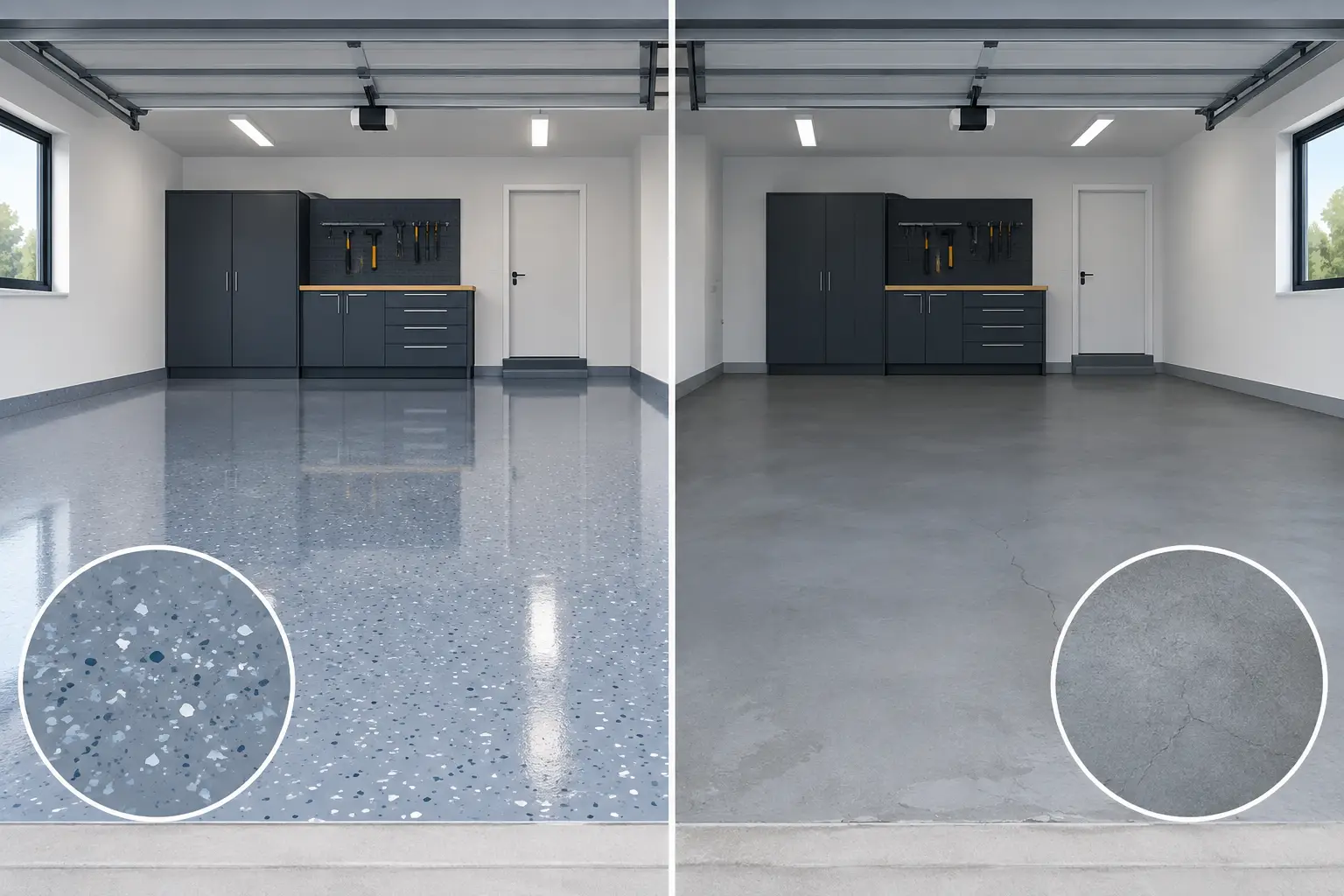
The result is more than a shinier floor. A well-installed coating creates a continuous, cleanable surface that helps resist oil, gasoline, road salt, household chemicals, tire marks, and everyday impact. Decorative flakes also add visual depth and help conceal the dust and small debris that stand out on plain gray concrete.
For many Indiana homeowners, the practical advantage is time. Instead of scrubbing stains from bare concrete or touching up painted areas each year, they can sweep, blow out, or mop a protected surface with far less effort.
Durability, Appearance, and Cost: The Real Trade-Offs
Paint has the lower initial price. It is widely available, can be applied by a capable do-it-yourself homeowner, and changes the look of a garage quickly. If appearance is the only objective and the floor sees minimal use, that lower investment may make sense.
The trade-off is service life and maintenance. Paint may require recurring touchups or complete recoating as it chips, fades, or lifts. Those repairs can become frustrating because every failed layer must be removed and the surface properly cleaned before another application has a chance to bond.
A professional coating requires a larger upfront investment because it includes substrate preparation, repair work, quality materials, skilled installation, and a system designed for performance. In return, it can deliver a more finished appearance and substantially greater resistance to the conditions that damage ordinary painted floors.
Not every garage needs the same system. A showroom-style garage with vehicles, tools, and frequent activity may benefit from a full-broadcast flake floor with a durable polyaspartic topcoat. A workshop may prioritize traction and chemical resistance. A garage with significant moisture issues may need additional evaluation before any finish is recommended. Honest recommendations begin with the slab, not a one-size-fits-all product pitch.
Installation Speed Is Not the Same as Rushing
A common concern is garage downtime. Traditional DIY paint can require several days between cleaning, priming, painting, and returning vehicles to the space. Even then, cure times can vary with temperature and humidity.
Modern polyaspartic systems can cure much faster than conventional finishes when they are installed under the right conditions. That makes a one-day installation possible for many garage projects, with floors often ready for normal use within about 24 hours. Speed comes from the chemistry of the coating and the discipline of the installation process, not from skipping preparation.
The best installers still take time to grind the concrete, repair cracks where appropriate, address edge details, and verify that the selected system fits the environment. A fast turnaround is valuable only when the bond beneath the finish is built to last.
How to Decide Which Option Fits Your Garage
Start with how you use the space. If your garage is primarily storage, sees little vehicle traffic, and needs a short-term visual lift, paint may be adequate. Choose a product designed specifically for concrete, follow its preparation requirements exactly, and expect to maintain it.
A coating is usually the better investment if you park vehicles inside through winter, bring road salt and water onto the slab, use the garage as a workshop, or want the space to look finished for years rather than seasons. It also makes sense when bare concrete is already showing stains, surface wear, or small cracks that need professional attention before they spread.
Design should factor into the decision as well. Coatings are available in flake blends, metallic effects, quartz systems, and solid colors, allowing the floor to support the style of the home instead of looking like an afterthought. For commercial garages, service bays, and high-traffic work areas, the ability to tailor texture, color, and performance can be just as important as durability.
Protect the Concrete You Already Have
Concrete replacement is expensive, disruptive, and often avoidable when surface damage is addressed early. A high-performance coating does not fix every structural issue, but it can protect a prepared slab from many of the daily exposures that accelerate wear.
ARQ Floor Coatings evaluates each garage around the realities of Indiana weather, vehicle traffic, and the condition of the concrete itself. The right answer is not always the cheapest finish on the shelf. It is the system that gives your floor the protection, appearance, and usable life your property deserves.
Before choosing between paint and a coating, look at the winters, vehicles, work, and cleanup your garage handles every week. That is where the better floor decision starts.