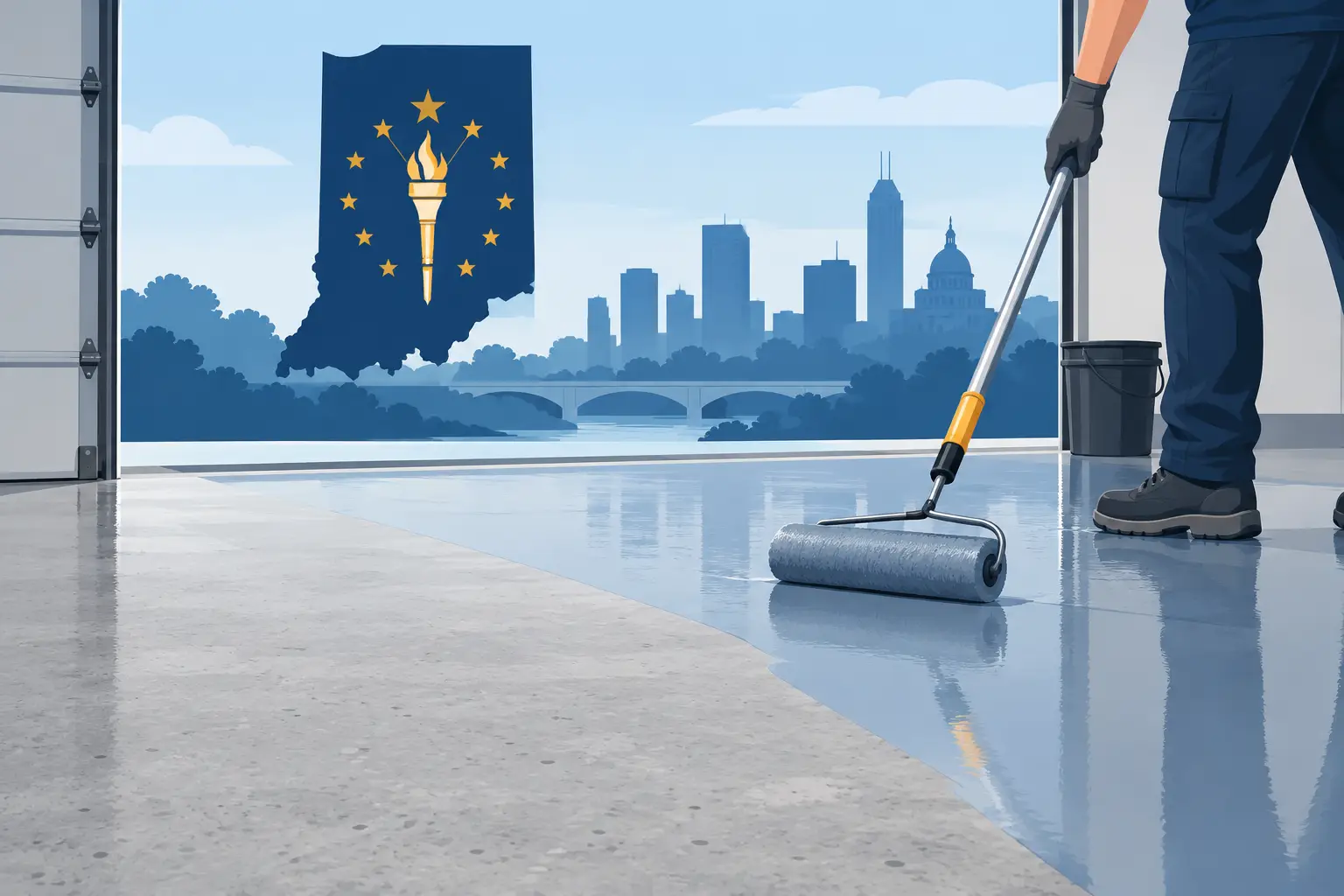
A garage floor can look fine in October and show salt damage, tire staining, and concrete dust by spring. That is the Indiana difference. Quality floor coatings do more than improve the appearance of concrete – they create a protective system designed to handle road salt, wet boots, humidity, dropped tools, vehicle traffic, and fast temperature changes without giving up the clean, finished look property owners want.
For homeowners, that can mean a garage that is easier to sweep and no longer feels like unfinished space. For commercial facilities, it can mean a surface that supports safer traffic, faster cleaning, and a more professional environment. The result depends on the coating chemistry, the preparation beneath it, and whether the system fits the way the floor will actually be used.
Why Indiana Concrete Needs More Protection
Bare concrete is porous. It absorbs water, oil, de-icing chemicals, and many of the stains that become hard to remove after a single season. When moisture enters the slab and freezes, it can contribute to surface deterioration. Road salt adds another challenge, especially on garage floors and driveways where vehicles carry brine inside all winter.
Concrete also moves. It expands and contracts with changing temperatures, and it can develop cracks or weak surface areas over time. A coating cannot erase every structural issue, but a properly specified system helps protect a prepared slab from the daily abuse that makes existing damage worse.
That is why a coating should never be treated as just paint. Paint may add temporary color, but it often lacks the adhesion, thickness, and chemical resistance required for an active garage, patio, warehouse, or showroom. Professional floor coatings are engineered systems. They begin with the concrete itself.
The Difference Is in Surface Preparation
A durable coating is only as dependable as the bond below it. If dust, oil, old sealers, weak concrete, or moisture-related issues remain on the surface, even a premium product can fail early. Peeling and delamination are usually preparation problems before they are product problems.
Industrial-grade mechanical preparation opens the concrete profile so the base coat can penetrate and bond. Contractors evaluate cracks, spalling, previous coatings, and the condition of the slab before selecting repairs and a coating system. This work is not the dramatic part of a floor transformation, but it is what makes the transformation last.
At ARQ Floor Coatings, the goal is to engineer surfaces that outperform and outlast in local conditions. That means assessing the concrete instead of offering the same answer for every garage, patio, or commercial floor. A lightly used residential garage has different demands than a restaurant kitchen entry or a warehouse aisle carrying rolling loads.
Polyaspartic and Epoxy Floor Coatings: What Fits Best?
Both epoxy and polyaspartic systems can be high-performing choices when they are installed correctly. The better option depends on the location, schedule, exposure, and desired finish.
Polyaspartic coatings for speed and weather resistance
Polyaspartic technology is a strong choice for many Indiana residential and commercial applications because it cures quickly, bonds aggressively to prepared concrete, and resists UV exposure. Unlike some coatings that can yellow when exposed to sunlight, UV-stable polyaspartic topcoats help outdoor-adjacent and sunlit spaces maintain their color and finish.
Fast cure times also reduce disruption. Many garage coating projects can be installed in one day and ready for regular use in about 24 hours, subject to site conditions and the specific system selected. That is valuable when a homeowner needs the garage back quickly or a business cannot afford a prolonged shutdown.
Polyaspartic systems are particularly well suited for garages, patios, pool decks, driveways, showrooms, and other spaces exposed to moisture, sunlight, temperature swings, and frequent traffic.
Epoxy coatings for demanding interior environments
Epoxy remains an excellent coating material for many interior floors. It can provide substantial build, chemical resistance, and a durable foundation for decorative or industrial systems. In warehouses, offices, retail environments, and certain production areas, an epoxy-based system may be the right solution based on traffic, substrate condition, and operational needs.
The trade-off is cure time and UV performance. Standard epoxy can take longer to return to service and may not be the first choice for sun-exposed areas without a suitable UV-stable topcoat. A knowledgeable contractor will explain where epoxy excels and where polyaspartic offers a better long-term fit.
Choosing the Right Finish for the Space
Protection should not require settling for a plain floor. Decorative floor coatings can be tailored to the character of a home or business while still delivering practical performance.
Flake systems are a popular option for garages, basements, patios, and commercial spaces because they create a textured, multi-tone appearance that helps disguise dust and everyday debris. Full-flake floors can be finished with a protective clear coat for a clean, durable surface that is easy to maintain.
Metallic coatings create movement and depth, making them a strong fit for showrooms, offices, retail spaces, and interiors where visual impact matters. Quartz systems provide a highly durable, textured finish for areas that need added traction and heavy-duty wear resistance. Solid-color coatings offer a clean, uniform appearance for utility spaces, warehouses, and commercial back-of-house areas.
For pool decks, patios, exterior entries, and ramps, traction is part of the conversation. A smooth glossy finish may look appealing, but outdoor surfaces need a system that considers water exposure and slip resistance. The right aggregate or texture can improve footing without making the surface difficult to clean.
Where High-Performance Coatings Make the Biggest Difference
Garage floors are the most familiar application, and for good reason. A professionally coated garage stands up to hot tires, oil drips, road salt, tool drops, and heavy storage while making the entire space feel more finished. The difference is especially noticeable after winter, when bare concrete often looks tired and stained.
Driveways and patios need coatings built for outdoor exposure. UV stability, moisture management, and slip resistance matter more here than they would in an enclosed room. Not every concrete surface is a candidate for the same system, so the condition and drainage of the area should be evaluated first.
Commercial floors bring a different set of priorities. Restaurants need cleanable surfaces that support a polished guest experience. Offices and showrooms benefit from durable finishes that elevate the space customers and employees see every day. Warehouses need abrasion resistance, chemical protection, and reliable performance under carts, equipment, and continuous foot traffic.
What to Expect From a Professional Installation
A clear process prevents surprises. It starts with an on-site review of the concrete, the intended use of the space, and any visible concerns such as cracking, moisture exposure, stains, or deteriorated areas. From there, the coating recommendation should match the property rather than follow a one-size-fits-all package.
The installation team prepares the slab mechanically, completes appropriate repairs, applies the selected base system, and broadcasts decorative flake or aggregate when specified. A protective topcoat completes the system and provides the wear layer that takes on daily traffic, chemicals, and cleaning.
One-day installation is possible for many projects, but it should not be a promise made without checking the floor. Severe damage, active moisture issues, weather conditions, or complex commercial requirements may require additional steps. Honest expectations are part of quality workmanship.
Get More Life From Your Concrete
Once installed, coated floors are straightforward to maintain. Sweep away grit that can act like sandpaper under tires and foot traffic. Clean spills promptly, especially oils and harsh chemicals. Use a mild cleaner recommended for coated floors rather than aggressive products that can leave residue or dull the finish.
The larger decision is choosing protection before minor concrete problems become expensive repairs. A floor that is already exposed to salt, moisture, stains, and abrasion will not improve on its own. The right coating system gives that surface a purpose-built finish, with industrial-grade precision and a look that belongs in the rest of the property.