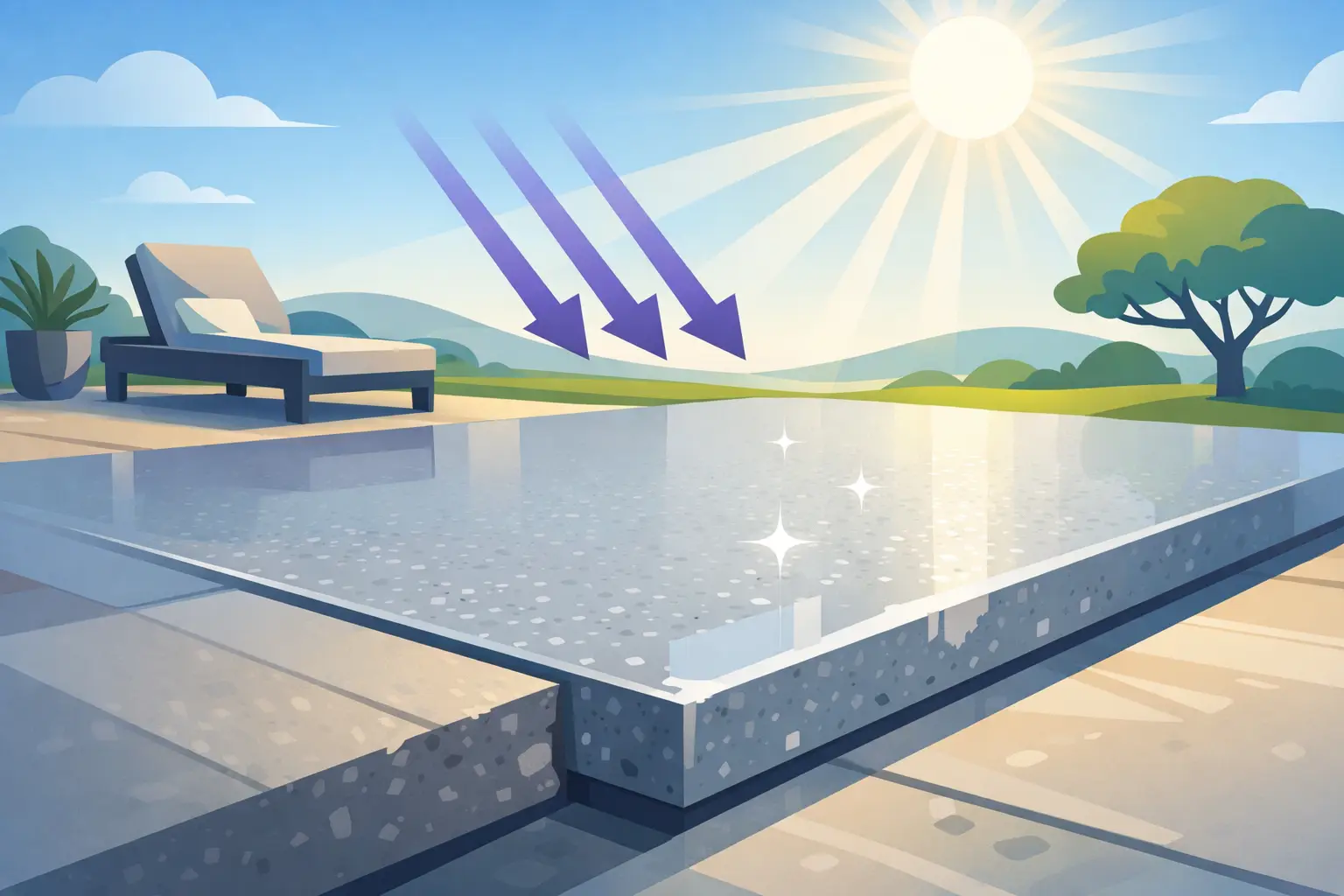
A garage floor can look great in March and noticeably dull by late summer if its topcoat cannot handle direct sun. So, does polyaspartic resist ultraviolet light? Yes. Quality polyaspartic systems are designed with UV-stable chemistry that helps them hold their color, gloss, and finish far better than conventional epoxy alone.
That matters in Indiana, where concrete surfaces face more than sunshine. A driveway, patio, pool deck, or garage opening may see intense summer UV exposure, humidity, rain, freeze-thaw cycles, road salt, tire traffic, and tracked-in moisture over the course of a year. The right coating system needs to protect the concrete through all of it, not just look good on installation day.
How Polyaspartic Handles UV Exposure
Polyaspartic is a high-performance coating technology in the polyurea family. It is commonly used as a protective topcoat because it cures quickly, bonds strongly to properly prepared concrete, and provides excellent resistance to weathering, staining, abrasion, and ultraviolet light.
UV light can break down less stable coating materials over time. The visible signs are usually chalking, yellowing, fading, or a loss of gloss. Chalking leaves a dusty, washed-out appearance on the surface. Yellowing is especially noticeable on light gray, white, beige, and clear-coated decorative floors.
A UV-stable polyaspartic topcoat is formulated to resist these changes. It does not mean a floor is immune to years of harsh sun, dirt, neglect, or physical damage. It means the coating has a much better defense against the sunlight-related discoloration that can make standard epoxy finishes look aged prematurely.
For a garage with a south- or west-facing door, this distinction is practical. The section closest to the opening receives far more sunlight than the back of the garage. With a properly specified polyaspartic system, the floor is better equipped to maintain a more consistent appearance across those different exposure zones.
Does Polyaspartic Resist Ultraviolet Light Better Than Epoxy?
In most exposed applications, yes. Traditional epoxy is valued for its adhesion, build, and chemical resistance, but many epoxy products are not naturally UV stable. When used as the final exposed layer outdoors or near large windows, epoxy can amber or yellow with prolonged sunlight.
That does not make epoxy a poor material. It makes system design important. Epoxy can be an excellent base coat because it penetrates and bonds well to prepared concrete. Polyaspartic is often the better choice for the exposed protective layer because it adds faster return to service and stronger UV resistance.
A professionally installed system may use a penetrating base coat, decorative vinyl flakes or quartz broadcast, and a UV-stable polyaspartic topcoat. Each layer has a job: adhesion, appearance, build, texture, and long-term protection. Calling any single coating “the best” without considering the surface, exposure, traffic, and use of the space leaves out the details that determine real performance.
Where UV Resistance Makes the Biggest Difference
Outdoor and semi-outdoor concrete is the obvious fit for polyaspartic protection. Patios, porches, pool decks, driveways, walkways, and commercial entrances all spend their lives exposed to changing weather. A UV-stable topcoat helps preserve the finish while protecting the concrete beneath it from stains, moisture, and wear.
Garages also benefit, even though they are enclosed. Sun reaches the floor every time the door is open, and daylight can concentrate along the front edge of the slab. Indiana homeowners who use garages as workshops, gyms, storage areas, or extensions of the home often want a finish that stays polished rather than turning yellow near the threshold.
For commercial properties, UV stability supports a cleaner, more professional appearance in showrooms, storefront entrances, restaurant patios, and service areas with overhead doors or extensive glass. Facility managers should also consider traction requirements. Decorative flakes, quartz, and properly selected texture can help create a safer walking surface, particularly around pool decks, wet entrances, and outdoor work areas.
UV Resistance Depends on the Entire Coating System
Not every product labeled polyaspartic delivers the same result. Resin quality, pigmentation, topcoat formulation, application thickness, and installation conditions all affect how the system performs. A thin, poorly prepared coating can fail from adhesion or moisture problems long before UV exposure becomes the main concern.
Surface preparation is the foundation. Concrete must be mechanically profiled to open the pores and remove weak material, contamination, old coatings, and surface laitance. Industrial-grade grinding creates the profile needed for a coating to bond. Skipping that work can lead to peeling, bubbling, or delamination, especially where moisture moves through the slab.
Moisture also deserves an honest assessment. Concrete can hold and transmit moisture even when it looks dry on the surface. A qualified installer evaluates the slab, repairs cracks where appropriate, and selects a system that fits the conditions. Polyaspartic technology is fast and durable, but it is not a shortcut around poor concrete preparation.
Color selection matters, too. Darker solid colors naturally show heat, dust, and light surface scratches differently than multicolor flake blends. Light colors may make dirt more visible, while certain decorative patterns help visually disguise everyday debris and wear. The best finish balances the property owner’s design goals with how the space will actually be used.
What Sunlight Cannot Do Alone, Other Conditions Can
A UV-stable polyaspartic coating can resist sun fading while still needing reasonable care. Abrasive grit dragged in from a driveway, metal snow shovels, sharp furniture legs, heavy equipment, and harsh cleaners can damage any finished surface. Road salt and winter slush should be removed rather than left to sit for weeks.
For outdoor surfaces, standing water and drainage are equally important. A coating protects the concrete, but it does not correct a patio or driveway with poor slope. Water that continually pools can create a maintenance issue and may increase slip risk. Cracks caused by active movement may also require a different repair approach than stable cosmetic cracks.
This is why a coating consultation should cover more than color samples. The conversation should include sunlight, moisture, traffic, drainage, vehicle use, slip resistance, concrete condition, and the timeline for returning the surface to service. For many projects, polyaspartic systems allow fast installation and a quick path back to normal use, but the exact schedule depends on weather and the selected system.
Keeping a Polyaspartic Floor Looking Its Best
Routine care is straightforward. Sweep away sand and debris, rinse outdoor surfaces as needed, and use a mild cleaner for garage or interior floors. Clean up automotive fluids, spills, and road salt promptly. Avoid highly caustic chemicals and stiff metal tools that can scratch the finish.
A coated floor is not meant to be fragile. It is meant to make a hard-working concrete surface easier to clean, more attractive, and better protected. Still, cleaning before contaminants build up is easier than trying to restore a neglected surface after a season of salt, dirt, and tire residue.
For Indiana property owners, UV resistance is one part of a larger performance picture. The strongest results come from a coating system built for local weather, installed over properly prepared concrete, and matched to the demands of the space. ARQ Floor Coatings evaluates those conditions before installation, so the finish is engineered to outperform and outlast where it matters most: under real vehicles, real weather, and real daily use.
If sunlight reaches your concrete for hours each day, do not settle for a finish that only looks good indoors. Choose a UV-stable polyaspartic system designed to keep protecting the surface through bright summers, freezing winters, and everything tracked across the floor in between.