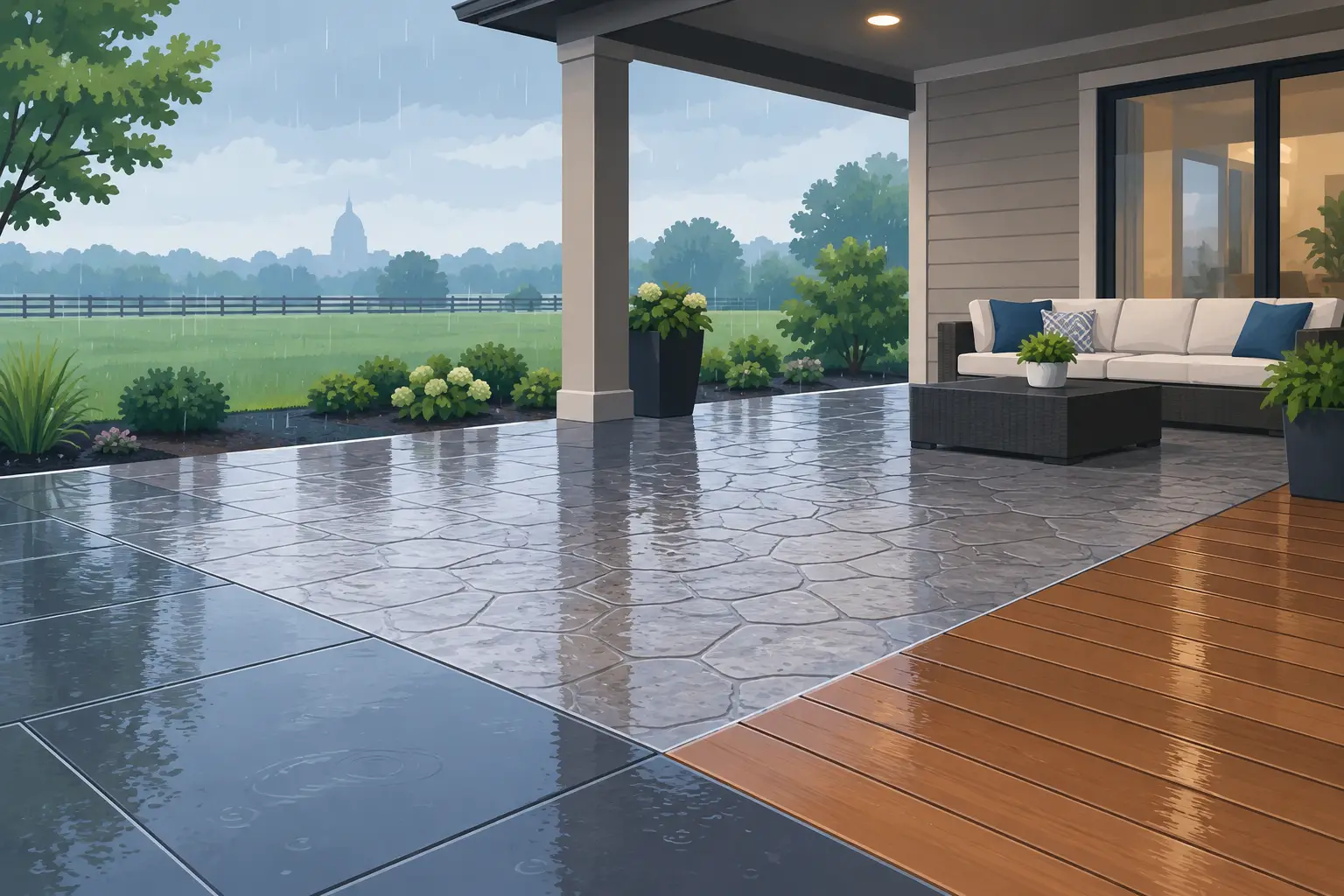
A patio can look great in June and still fail its first Indiana winter. Rain settles into low spots, humidity works into porous concrete, and freezing temperatures turn absorbed water into surface damage. The best patio finishes for rain do more than change the color of the slab. They protect the concrete, improve traction, and hold up through wet springs, hot summers, road salt, and freeze-thaw cycles.
For most Indiana homes, the right answer starts with the condition of the concrete and the way water moves across the patio. A high-performance coating can dramatically improve an aging slab, but no finish can correct serious drainage problems on its own. Industrial-grade surface preparation, sound concrete repair, and a finish built for exterior exposure are what create a patio that performs after the forecast changes.
What Rain Does to an Unprotected Patio
Concrete is durable, but it is not waterproof. Its pores absorb moisture, and repeated wet-dry cycles can leave behind stains, surface dusting, efflorescence, and small cracks that grow over time. When that moisture freezes, it expands inside the slab. That is one reason patios in Central Indiana often begin to scale, pit, or flake at the surface.
Rain also changes how a patio feels underfoot. Smooth or worn concrete becomes slick, especially near grills, pools, planters, and entry doors. Add leaf debris, algae, or pollen to a shaded section of patio, and an ordinary surface can become a safety concern.
A quality finish should address three different jobs: limit water and stain penetration, provide dependable wet traction, and tolerate UV exposure without fading or yellowing. Those requirements rule out a surprising number of low-cost coatings.
Best Patio Finishes for Rain: How the Options Compare
The best finish depends on your patio’s use, drainage, sun exposure, and existing condition. Here is how common choices perform when rain is part of the equation.
Penetrating Sealers
Penetrating sealers soak into concrete rather than forming a visible film on top. They can reduce water absorption and help limit damage from moisture and deicing salts. For newer, plain concrete that homeowners want to keep looking natural, this can be a practical maintenance option.
The trade-off is limited visual improvement and limited protection from surface wear, stains, and abrasion. Penetrating sealers also do not solve traction concerns, and they need to be reapplied on a schedule. They work best when the slab is already in good shape and the goal is simple water repellency rather than a complete patio upgrade.
Acrylic Concrete Sealers
Acrylic sealers are widely available, relatively inexpensive, and can deepen the color of concrete or stamped concrete. Some are used as a sacrificial top layer to refresh decorative patios.
For an exposed Indiana patio, however, acrylic is often a short-term solution. It can wear faster in traffic paths, become slippery if applied too heavily, and may need frequent recoating. Results vary sharply with product quality and surface preparation. It is not the strongest choice for a patio that sees heavy furniture movement, pets, gatherings, or persistent weather exposure.
Epoxy Coatings
Epoxy offers excellent adhesion and chemical resistance, which makes it a strong system for many interior floors. On an outdoor patio, epoxy requires careful consideration. Standard epoxy can amber or chalk under direct UV exposure, and it is less forgiving of major temperature changes than a dedicated exterior system.
Epoxy can still play a role as part of a professionally designed coating build, particularly where a compatible UV-stable topcoat is used. But epoxy alone is rarely the best long-term answer for a rain-exposed patio in Indiana. A contractor should evaluate the slab’s moisture condition before recommending any film-forming coating.
Polyaspartic Flake Systems
For many residential patios, a UV-stable polyaspartic flake system is among the strongest options. The system starts with mechanically prepared concrete, followed by a high-performance base coat, decorative vinyl flakes, and a durable clear topcoat. The result is a finished surface with color variation, texture, and a protective barrier over the concrete.
Polyaspartic technology is well suited to Midwest conditions because it bonds strongly to properly prepared concrete, resists UV exposure, and handles moisture, stains, abrasion, and temperature swings better than many conventional coatings. Decorative flakes also help camouflage dirt, pollen, and minor wear between cleanings.
The key is texture. A patio finish should be specified with an appropriate traction profile, not simply made glossy. A professional installer can adjust the finish to suit an open patio, a covered entertainment area, or a pool-adjacent surface where wet-foot traction deserves extra attention.
Quartz Broadcast Systems
Quartz systems use colored quartz aggregate to create a highly textured, durable surface. They are a particularly strong choice for pool decks, commercial exterior walkways, and patios where slip resistance is the top priority.
Compared with decorative flakes, quartz has a more granular, architectural appearance. It is not always the preferred look for every backyard patio, but it delivers serious performance in wet areas. If a patio serves a restaurant, clubhouse, apartment community, or frequently used pool area, quartz can provide the durability and traction that a smoother decorative finish may not.
Drainage Still Comes First
Even the best coating cannot make standing water disappear. Before selecting a patio finish, look at what happens during a steady rain. Water should move away from the house and should not sit against door thresholds, foundation walls, or patio transitions for hours.
Minor surface irregularities may be repairable during preparation. Larger drainage issues may require concrete leveling, crack repair, joint attention, or changes to surrounding landscaping and downspout discharge. This is the no-surprise part of a professional assessment: identify the problem before coating over it.
A patio with proper slope and a protective, textured finish will be easier to clean and safer to use. A patio with ponding water covered by a premium coating may still develop slippery algae, water marks, and avoidable maintenance needs.
Surface Preparation Determines Whether the Finish Lasts
A patio coating is only as reliable as the concrete below it. Paint, old sealer, contaminants, weak surface paste, and loose material can prevent proper adhesion. That is why pressure washing alone is not enough for a high-performance system.
Professional installation begins by evaluating cracks, moisture concerns, prior coatings, and the slab’s overall integrity. Mechanical surface preparation creates the profile needed for coating adhesion. Cracks and damaged areas are repaired as appropriate, then the coating system is installed within the correct conditions for temperature and humidity.
This matters in Indiana, where a patio may have experienced years of winter salt, spring rain, lawn chemicals, and repeated expansion and contraction. Skipping preparation can lead to peeling or premature failure, even if the topcoat itself is a quality product.
Choosing a Color and Texture That Work Outside
Outdoor patios need a finish that looks intentional without becoming high-maintenance. Medium-tone flake blends are often practical because they hide dust, pollen, and tracked-in debris better than solid black, bright white, or a very light single-color surface. Earth tones and gray blends also work well with brick, siding, stone, and landscaping common across Indiana homes.
Texture should match the setting. A covered patio used mainly for dining may need moderate texture for comfortable cleanup and furniture movement. An uncovered patio near a pool, garden, or frequently used side entry may benefit from a more aggressive traction additive or quartz finish.
Avoid choosing solely from a small color sample. Look at the patio’s sun exposure, surrounding finishes, and the amount of daily traffic. The right finish should perform well after rain, not just look good on installation day.
Maintenance That Protects Wet-Weather Performance
A coated patio does not demand constant work, but it should not be ignored. Sweep away leaves and grit, rinse off pollen and spills, and use a mild cleaner when needed. Avoid harsh acids, abrasive wire tools, and products that leave a slippery residue.
Keep gutters, downspouts, and landscape drainage from sending concentrated water across the same patio area. During winter, use a concrete-friendly deicer when possible and remove standing slush rather than allowing it to refreeze. These simple habits protect both the coating and the concrete underneath.
For Indiana property owners who want an outdoor surface built to outperform and outlast, a professionally installed polyaspartic flake or quartz system is often the right starting point. ARQ Floor Coatings can assess drainage, substrate condition, traction needs, and design preferences before recommending a finish built for your specific patio. A clear evaluation now is the best way to enjoy the next rainstorm from a patio that is ready for it.