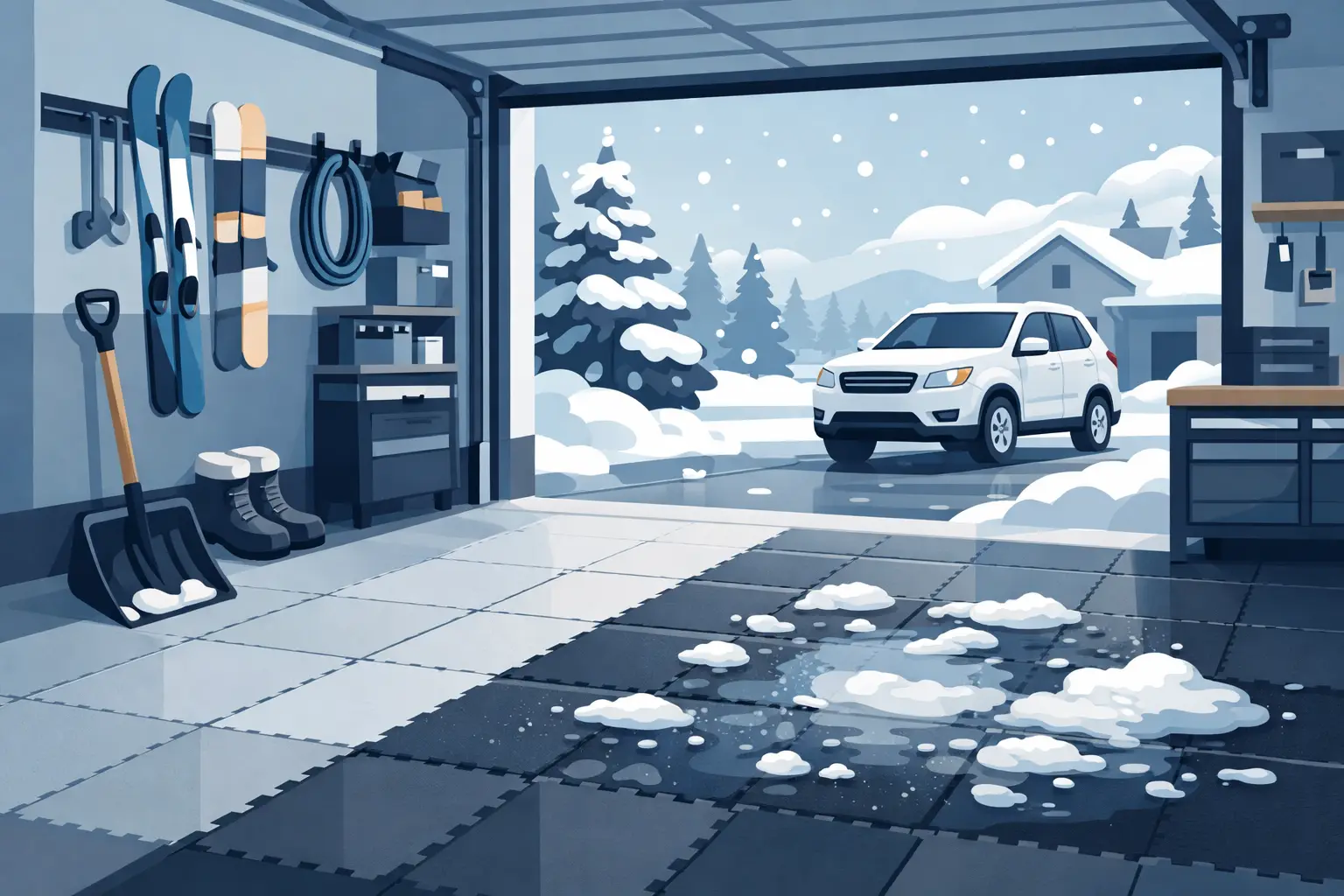
A garage floor in Indiana has a harder job than most people realize. It handles snowmelt dripping off vehicles, road salt ground in by tires, humid summer air, oil leaks, dropped tools, and freeze-thaw cycles that expose every weak spot in the concrete. The best garage flooring is not simply the finish that looks best on installation day. It is the system that stays bonded, easy to clean, and ready for daily use through years of Midwest weather.
For many homeowners, that points to a professionally installed polyaspartic coating system. But coatings, interlocking tiles, mats, and DIY paint all have a place depending on the condition of the slab, how the garage is used, and how long you expect the floor to perform.
What Makes the Best Garage Flooring in Indiana?
A garage floor needs more than color. The right system should protect concrete from moisture intrusion, chemical staining, abrasion, hot-tire pickup, and salt damage without turning routine cleanup into a project. It also needs to account for a local reality: concrete expands, contracts, and holds moisture differently through an Indiana year.
Adhesion comes first. A coating is only as reliable as the concrete preparation underneath it. If a surface is merely cleaned and coated, contaminants, weak concrete paste, or hidden moisture can compromise the bond. Industrial-grade mechanical preparation opens the concrete profile so the coating can anchor into the slab rather than sit on top of it.
UV stability matters as well, particularly for garages with strong natural light or doors left open in summer. Some traditional coatings can amber or fade over time. A UV-stable topcoat helps maintain the intended color and finish while providing long-term protection.
Finally, consider downtime. A garage is often a workshop, storage room, entry point, and parking space all at once. Flooring that requires a week of curing may be inconvenient for an active household. Fast-curing polyaspartic systems can often be installed in one day and returned to service in roughly 24 hours, depending on site conditions.
Comparing Garage Flooring Options
Polyaspartic flake coatings
For homeowners who want a finished, high-performance surface with minimal maintenance, a polyaspartic flake system is usually the strongest all-around choice. The system typically begins with prepared concrete, followed by a penetrating base coat, decorative vinyl flakes, and a protective clear topcoat. The finished floor has a clean, consistent appearance that helps conceal small amounts of dust and everyday debris better than a solid-color surface.
Polyaspartic technology is especially well suited to Indiana garages because it cures quickly, bonds strongly to correctly prepared concrete, and resists UV exposure, chemicals, abrasion, and moisture. It also stands up well to road salt, tire traffic, lawn equipment, bicycles, and the occasional dropped wrench.
The trade-off is that quality installation is not a shortcut project. Cracks need appropriate treatment, damaged areas may need repair, and the concrete must be evaluated for moisture and contamination. A professional system costs more upfront than paint or a loose-laid floor, but it protects the slab and avoids the frequent replacement cycle common with lower-grade options.
Epoxy coatings
Epoxy remains a proven garage flooring material. It can create a thick, durable protective layer and offers attractive decorative options, including flake, metallic, and solid-color finishes. In the right environment, epoxy performs very well against stains and wear.
The distinction is often in cure speed and UV performance. Traditional epoxy systems generally need more time before they can be used, and some formulations are more likely to yellow in direct sunlight. That does not make epoxy a poor choice. It can be an excellent fit for certain indoor applications, garages with limited UV exposure, or projects where extended cure time is not an issue.
For a homeowner looking for fast turnaround and strong year-round performance in a garage that sees regular vehicle traffic, polyaspartic topcoats often offer a practical advantage.
Interlocking garage tiles
Rigid interlocking tiles can be appealing because they install quickly and come in many colors and patterns. They can also be replaced individually if one section is damaged. For renters, temporary spaces, or homeowners who prefer a modular look, tiles may be worth considering.
Their limitations show up at the seams. Melted snow, saltwater, oil, and dust can pass between tiles and collect underneath, making the concrete harder to clean over time. Some tile styles can shift under heavy loads or create a less stable surface for rolling toolboxes and equipment. They also do not repair or protect deteriorating concrete beneath them.
Tiles are best viewed as a removable surface covering, not a concrete restoration system.
Garage floor mats and roll-out vinyl
Mats are a simple way to contain water and salt under a parked vehicle. They are useful for a seasonal parking area or as an added layer of protection over an existing floor. Roll-out vinyl can improve appearance quickly and requires little installation work.
However, mats are not a complete flooring solution. Water can escape around the edges, debris collects underneath, and the material can crease, slide, or wear under turning tires. They also do little to stop stains, cracks, and moisture-related deterioration across the rest of the garage.
DIY paint kits
DIY paint kits are the lowest-cost option and can make a stained floor look better for a short time. The challenge is durability. Most consumer-grade kits have limited build, limited chemical resistance, and limited tolerance for imperfect surface preparation. Peeling around tires, chips from impact, and worn traffic paths are common when concrete is not properly profiled or when moisture moves through the slab.
A paint kit can make sense for a temporary cosmetic refresh. It is rarely the best choice for a garage expected to handle vehicles, salt, tools, and daily use for years.
Match the Floor to How You Use the Garage
A two-car garage used primarily for parking benefits from a flake coating that hides dirt, resists salt, and can be rinsed or swept clean. Homeowners who use the garage as a workshop may prefer a lighter flake blend that improves visibility while keeping a professional appearance. For a high-end vehicle space or showroom-style garage, metallic or solid-color systems create a more dramatic finish, although they may show dust and scratches more readily than a full flake floor.
If the garage connects directly to the home, traction deserves attention. Decorative flakes add texture, and the topcoat can be selected to balance cleanability with slip resistance. A floor should be easy to mop without feeling overly aggressive underfoot. The right texture depends on vehicle use, foot traffic, and whether the space is likely to see frequent wet shoes, snowmelt, or pets.
Concrete condition also changes the recommendation. Hairline cracks, surface scaling, old paint, oil contamination, and moisture concerns should be assessed before choosing a finish. A contractor who skips this step may give you a faster quote, but not necessarily a floor built to last.
Why Surface Preparation Decides the Result
The best coating material cannot overcome poor preparation. Before installation, the floor should be inspected for damage and previous coatings. Surface contaminants need to be removed, cracks and defects addressed where appropriate, and the concrete mechanically prepared to create the right profile for adhesion.
This work is where lasting performance is won or lost. Acid washing or simply power washing a garage floor does not provide the same concrete profile as diamond grinding. Proper preparation also reveals problem areas that need attention before the coating goes down, rather than after it begins to peel.
At ARQ Floor Coatings, the goal is to engineer surfaces that outperform and outlast Indiana conditions, not cover up problems with a thin finish. That means matching the system to the slab, the environment, and the way the space will actually be used.
Think Beyond the Installation Day
A garage floor should still look good after repeated winters, not just after the installer leaves. When comparing estimates, ask what type of surface preparation is included, how cracks are handled, whether the topcoat is UV-stable, what chemical and abrasion resistance the system provides, and how soon the garage can return to service.
Also ask about the warranty and who performs the work. A direct local installation team has ownership of the assessment, preparation, application, and final result. That accountability matters when the floor is protecting one of the most heavily used concrete surfaces on your property.
The right garage floor makes everyday ownership easier. Saltwater wipes up instead of soaking in. Oil drips do not become permanent stains. The space feels cleaner, brighter, and more finished, whether it is holding family vehicles on a January morning or serving as a work area on a summer weekend.